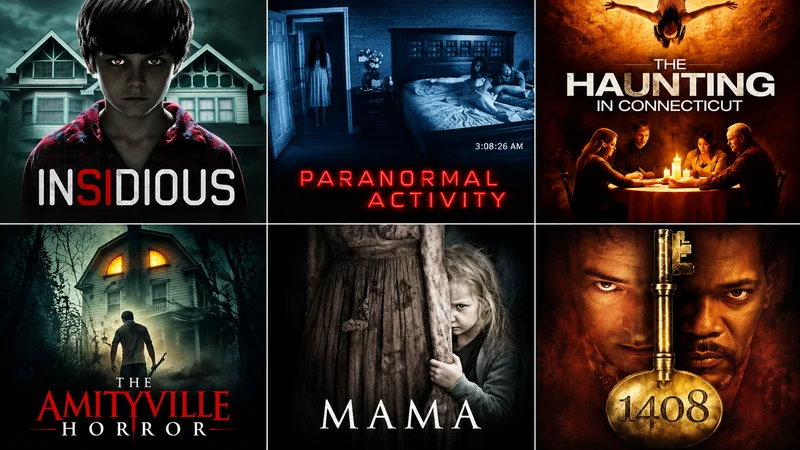
The best paranormal horror movies make the impossible feel close. A quiet hallway becomes threatening, a photograph reveals an inexplicable detail, and a ritual invites something that refuses to leave. This Top 35 brings together ghosts, demonic possession, haunted objects, folk curses, and supernatural mysteries from different decades.
At NetShort, we favor variety over arbitrary scare rankings. Some films create dread through suggestion and grief; others use violent transformations, apparitions, or handheld cameras. Each recommendation identifies its style and intensity so viewers can choose the supernatural story that suits them.
The best paranormal horror movies do not always offer certainty, even within their fictional worlds. Some question a character’s perceptions; others establish clear supernatural rules. Each entry gives quick viewing cues, a spoiler-conscious premise, and an explanation of its appeal. Stories marketed as inspired by real events are treated as dramatizations, not verified paranormal accounts.
What Makes a Paranormal Horror Movie Worth Watching?
- Ghost stories: Haunted homes, apparitions, unfinished family business, and places carrying painful histories.
- Possession and demons: Characters confronted by an apparently hostile force that threatens identity or bodily control.
- Curses and rituals: Objects, images, ceremonies, and taboos that give supernatural danger its own rules.
- Found footage: Diaries, documentary interviews, security cameras, and video calls used to restrict what viewers can know.
- Viewing intensity: From quiet Gothic mysteries to disturbing violence, traumatic family themes, and graphic possession scenes.
The best paranormal horror movies connect unsettling ideas to recognizable fears. This list groups films by supernatural experience rather than an invented scare score, combining influential classics with inventive recent releases. A paranormal premise does not guarantee suitability for children; check local classifications.
Haunted Houses, Spirits, and Gothic Mysteries
The best paranormal horror movies often begin with a place that should feel safe but does not. These seven titles build fear through family secrets, unexplained visitors, and buildings that seem to remember the past.
1. The Innocents (1961)
- Style: Ambiguous Gothic haunting
- Mood: Restrained, elegant, and deeply uneasy
- Best for: Viewers who enjoy uncertain perceptions
Jack Clayton follows Miss Giddens, a governess hired to care for two children at an isolated English estate. She becomes convinced that figures associated with the property’s past are threatening her young charges. Deborah Kerr gives the governess both fierce concern and troubling certainty, leaving the audience to examine whether the danger comes from actual spirits or from the way she interprets events.
The film makes extraordinary use of black-and-white cinematography, distant figures, and unsettling sound. It is not interested in explaining every image for the viewer. Its delicate treatment of uncertainty is a perfect starting point for anyone who prefers psychological tension over graphic supernatural spectacle.
2. The Haunting (1963)
- Style: Haunted-house psychological investigation
- Mood: Claustrophobic and suggestive
- Best for: Fans of unseen threats and strange architecture
Robert Wise brings a group of investigators to Hill House, a mansion associated with unexplained deaths and disturbing experiences. Eleanor Vance, who longs for a sense of belonging, responds to the building with particular intensity. Julie Harris makes her emotional fragility central as the house’s confusing spaces and alarming noises seem to undermine everyone’s confidence.
Few films make a closed door or a distant sound so frightening. Rather than depending on a visible ghost, The Haunting encourages viewers to listen and imagine what might be pressing against the walls. This is the original 1963 adaptation, not the separate 1999 remake.
3. The Changeling (1980)
- Style: Grief-driven ghost mystery
- Mood: Patient, melancholy, and atmospheric
- Best for: Viewers who like solving a haunted-house history
Composer John Russell moves into a large Seattle mansion after the deaths of his wife and daughter. Unexplained noises, a troubling presence, and clues about the property persuade him to investigate. George C. Scott portrays a grieving man whose careful search for answers contrasts with the emotional chaos surrounding the apparent haunting.
Peter Medak lets old records and neglected rooms carry the mystery instead of filling the screen with elaborate apparitions. The film’s quietest images often leave the strongest impression. It is especially rewarding when you want a ghost story built around uncovering injustice and acknowledging loss.
4. Poltergeist (1982)
- Style: Suburban family haunting
- Mood: Spectacular, affectionate, and frightening
- Best for: Families with older viewers who enjoy big scares
Tobe Hooper follows the Freeling family as strange disturbances begin inside their comfortable suburban home. Moving furniture and unexplained voices initially seem extraordinary rather than dangerous, but the situation becomes terrifying when young Carol Anne is placed at risk. The parents search desperately for help as the house stops behaving like a place of safety.
Its mixture of practical effects, domestic humor, and family concern made it a landmark of supernatural spectacle. Because the characters care intensely about one another, the elaborate haunting retains an emotional purpose. Some scenes may be upsetting for children even though the film has a comparatively playful surface.
5. The Sixth Sense (1999)
- Style: Supernatural mystery and family drama
- Mood: Quiet, sad, and suspenseful
- Best for: First-time viewers seeking an emotional ghost story
M. Night Shyamalan follows child psychologist Malcolm Crowe as he attempts to help Cole, a boy who is terrified by experiences he cannot explain. Bruce Willis plays the concerned therapist opposite Haley Joel Osment’s anxious child, whose isolation makes ordinary school and family situations increasingly difficult. Their conversations are the core of a carefully controlled mystery.
The Sixth Sense succeeds because it treats fear and loneliness seriously rather than reducing the child to a convenient paranormal device. Its structure rewards close attention and is best approached without spoilers. Compared with more violent possession films, the emphasis is on empathy, suspense, and the unknown.
6. The Others (2001)
- Style: Gothic ghost mystery
- Mood: Elegant, restrained, and disorienting
- Best for: Viewers who prefer mood over gore
Alejandro Amenábar places Grace and her two children in a darkened country house after World War II. Because the children must avoid strong light, curtains remain closed and household routines are unusually strict. The arrival of new servants and unexplained disturbances make Grace suspect that strangers are entering the home. Nicole Kidman anchors the story with mounting anxiety.
The film uses shadow, silence, and carefully restricted information to turn a home into a maze of uncertainty. Its mystery is strongest when discovered rather than explained in advance. It remains an excellent choice for viewers who enjoy classic haunted-house storytelling without frequent graphic effects.
7. The Orphanage (2007)
- Style: Spanish supernatural family mystery
- Mood: Tender, uncanny, and emotionally devastating
- Best for: Viewers drawn to grief-centered ghost stories
J. A. Bayona follows Laura, who returns to the orphanage where she spent part of her childhood and hopes to reopen it as a home for children. When her son disappears, strange experiences and troubling clues lead her toward the building’s history. Belén Rueda gives Laura’s search the urgency of a parent who cannot accept unanswered questions.
Its ghostly atmosphere grows from children’s games, old corridors, and painful memories. The Orphanage is more emotionally demanding than its elegant surface may suggest, with the fear of losing a child driving the mystery. It rewards patient viewing and an avoidance of plot spoilers.
Among the best paranormal horror movies, classic haunted houses show how mystery and emotional vulnerability can be as frightening as a visible ghost. Choose by mood and pace.
Demonic Possession and Supernatural Investigations
Possession stories challenge safety and identity, using religion, professional investigation, family care, and forensic mystery.
8. The Exorcist (1973)
- Style: Religious possession horror
- Mood: Severe, intimate, and confrontational
- Best for: Adults interested in a foundational demonic drama
William Friedkin follows actress Chris MacNeil as her daughter Regan begins experiencing terrifying changes that medicine cannot easily explain. Her desperation brings priests into an investigation shaped by doubt, faith, and the child’s suffering. Ellen Burstyn and Linda Blair make the family crisis feel urgent even when the supernatural possibilities become extraordinary.
The Exorcist is influential for the seriousness with which it presents fear of losing a loved one. Medical scenes, religious imagery, and disturbing physical effects can be upsetting. Although promotional accounts reference real cases, the movie’s possession and exorcism are dramatized events, not scientific evidence of demons.
9. The Conjuring (2013)
- Style: Period paranormal-investigator haunting
- Mood: Accessible, tense, and jump-scare driven
- Best for: Fans of haunted houses and family rescue stories
James Wan follows the Perron family after frightening incidents disturb their Rhode Island farmhouse. Investigators Ed and Lorraine Warren become involved when the family’s attempts to understand the disturbances fail. Patrick Wilson and Vera Farmiga portray the investigators, while the parents’ concern for their children keeps the escalating danger grounded in domestic stakes.
The film’s suspense depends on careful camera placement and the feeling that an apparition might already be present outside the viewer’s attention. It helped revive polished, traditional supernatural horror for broad audiences. The advertised real-case inspiration should not be mistaken for verification of the film’s paranormal claims.
10. The Conjuring 2 (2016)
- Style: London-set possession and haunted-house sequel
- Mood: Energetic, gloomy, and theatrical
- Best for: Viewers who enjoyed the first Conjuring film
James Wan brings Ed and Lorraine Warren into a case involving the Hodgson family in Enfield, London. A young girl appears to be at the center of distressing disturbances, and the investigators must decide how to respond amid conflicting evidence and skepticism. The household’s vulnerability remains central even as the sequel expands its supernatural spectacle.
The Conjuring 2 uses an unfamiliar location and several memorable images to distinguish itself from the farmhouse of the original. It is a dramatized supernatural story loosely associated with reported claims, not a verified reconstruction. Watch the first film beforehand for the investigators’ established relationship.
11. Insidious (2010)
- Style: Astral-projection and family possession horror
- Mood: Restless, vivid, and frightening
- Best for: Fans of imaginative otherworldly imagery
James Wan follows Josh and Renai Lambert as their son Dalton falls into an unexplained coma and alarming disturbances begin around their family. Moving houses does not resolve the problem, leading the parents to seek help from people with knowledge of unusual spiritual experiences. Patrick Wilson and Rose Byrne anchor the increasingly desperate situation.
The film changes the usual haunted-house premise by suggesting that the source of danger may not be the building itself. Its dreamlike otherworld, unsettling music, and sudden apparitions give it a distinctive personality. Some of its strongest scares arise from places that initially look completely ordinary.
12. The Exorcism of Emily Rose (2005)
- Style: Courtroom drama and possession horror
- Mood: Somber, argumentative, and disturbing
- Best for: Viewers interested in faith versus medical explanations
Scott Derrickson frames the death of young Emily Rose through the trial of the priest who attempted an exorcism. A lawyer and witnesses explore competing interpretations of the events leading to her death, while flashbacks present Emily’s experiences. Laura Linney and Tom Wilkinson provide the courtroom perspective, and Jennifer Carpenter portrays Emily’s distress.
The mixture of legal argument and frightening reenactments is what makes the film unusual. It raises questions about responsibility and belief without making the courtroom equivalent to scientific proof of possession. The case is fictionalized from a real person’s experience, and the film’s paranormal explanation remains a dramatic interpretation.
13. The Autopsy of Jane Doe (2016)
- Style: Morgue-set supernatural investigation
- Mood: Clinical, claustrophobic, and steadily uncanny
- Best for: Viewers who love contained mysteries
André Øvredal places a father and son, both coroners, in a morgue where they must examine an unidentified young woman. Each stage of the autopsy presents clues that resist ordinary medical explanation, while unsettling events begin to threaten the building. Brian Cox and Emile Hirsch bring a believable professional relationship to the increasingly impossible assignment.
The film takes a procedural mystery and gradually converts it into supernatural terror. Because the setting is so controlled, small changes in sound and objects become especially frightening. It is an excellent choice for viewers who like learning the rules of a haunting alongside the characters.
14. The Dark and the Wicked (2020)
- Style: Rural demonic family horror
- Mood: Bleak, merciless, and grief-soaked
- Best for: Experienced viewers comfortable with despair
Bryan Bertino follows adult siblings Louise and Michael when they return to their family farm to support their dying father and distressed mother. Disturbing encounters suggest that a hostile presence has taken an interest in the household. Marin Ireland and Michael Abbott Jr. portray relatives who cannot easily separate their grief from what is happening around them.
The film’s rural emptiness and unsparing tone create a particularly oppressive supernatural experience. It offers little of the emotional release associated with more crowd-pleasing haunted-house movies. Suicide-related material, family suffering, and disturbing images make it a demanding recommendation for adults.
These possession stories take different approaches. The Exorcist centers a family, the Conjuring films follow investigators, and The Autopsy of Jane Doe transforms a forensic examination.
Folk Curses, Occult Rituals, and Family Secrets
Some of the best paranormal horror movies draw on rituals, turning old beliefs and inherited wrongdoing into danger. Their varied cultural settings deserve more attention than a generic label of demonic horror.
15. The Evil Dead (1981)
- Style: Cabin-in-the-woods demonic possession
- Mood: Raw, frantic, and gruesome
- Best for: Fans of practical effects and relentless supernatural attacks
Sam Raimi sends Ash Williams and his friends to a remote cabin, where a recording connected to an ancient book unleashes dangerous forces. Possession threatens the group, turning familiar companions into frightening adversaries. Bruce Campbell anchors the chaotic survival story as the isolated setting becomes increasingly hostile and ordinary objects cease to feel dependable.
Its energetic camera work and inventive low-budget effects helped establish a new style of possession horror. The original is harsh and frightening, unlike the more overt splatter comedy of Evil Dead II. The film first screened in 1981 and received wider US theatrical distribution in 1983.
16. The Witch (2015)
- Style: New England period folk horror
- Mood: Austere, ominous, and psychologically severe
- Best for: Viewers who appreciate religious and historical atmosphere
Robert Eggers follows a Puritan family expelled from its community and living beside a threatening forest in seventeenth-century New England. When an infant disappears, suspicion turns toward teenage daughter Thomasin and the family begins turning against itself. Anya Taylor-Joy, Ralph Ineson, and Kate Dickie play characters whose faith and fear become inseparable.
The Witch uses period language, harsh landscapes, and restrained supernatural suggestions to create unusually credible folk horror. Its fear grows from accusation and isolation as much as from anything in the woods. The film premiered in 2015 and opened widely in US theaters in 2016.
17. The Wailing (2016)
- Style: South Korean ritual and possession mystery
- Mood: Long, feverish, and persistently ambiguous
- Best for: Patient viewers interested in conflicting spiritual explanations
Na Hong-jin follows a police officer investigating disturbing deaths and illnesses in a rural village. Suspicion falls on an outsider, but the evidence never fits a simple explanation, and the officer’s concern for his daughter makes every choice personal. Ritual specialists, witnesses, and villagers introduce competing accounts of what may be tormenting the community.
The Wailing is frightening because incomplete information drives desperate decisions. It draws on folk belief and religious imagery without reducing its mystery to an easy set of rules. Allow time for its deliberate development, and avoid explanations of the ending until after watching.
The Wailing is a useful companion to our best asian horror movies guide, which explores ghost stories, regional folklore, and supernatural mysteries from multiple Asian film industries. Here, the focus stays on paranormal threats rather than the wider range of creature features or psychological thrillers.
18. A Dark Song (2016)
- Style: Occult ritual chamber piece
- Mood: Methodical, claustrophobic, and moving
- Best for: Viewers who prefer patience to jump scares
Liam Gavin follows Sophia, a grieving mother who hires occult practitioner Joseph Solomon to guide her through a lengthy ritual in a remote country house. Their demanding preparations force them to confront distrust, regret, and their private motives. Catherine Walker and Steve Oram make the confined setting feel like a pressure chamber for two incompatible personalities.
Unlike films that treat a séance as a single dramatic scene, A Dark Song makes sustained ritual the entire structure of the story. The slow pace is intentional, allowing spiritual danger and emotional change to emerge together. Its supernatural content is fictional, even when it draws on historical occult traditions.
19. Hereditary (2018)
- Style: Inherited occult family horror
- Mood: Devastating, intense, and deeply unsettling
- Best for: Adults prepared for grief and disturbing imagery
Ari Aster follows the Graham family after the death of their elderly matriarch. Annie, her husband, and their children face escalating tragedy while disturbing information about their ancestry comes to light. Toni Collette makes Annie’s grief, resentment, and fear central to the increasingly sinister circumstances that appear to surround the household.
The film makes family relationships feel like part of a larger, frightening mechanism. Its precise compositions and quietly ominous details reward attention, while several scenes can be extraordinarily upsetting. Hereditary is best suited to viewers who want emotionally severe supernatural horror rather than a light ghost adventure.
20. The Medium (2021)
- Style: Thai folk-possession mockumentary
- Mood: Observational, ritualistic, then extreme
- Best for: Adults interested in regional supernatural traditions
Banjong Pisanthanakun follows a documentary crew interviewing Nim, a spirit medium in northeastern Thailand, as troubling events emerge within her family. What begins as an apparent study of spiritual inheritance becomes increasingly difficult for the filmmakers to document safely. Family history and competing interpretations of the symptoms complicate the crew’s understanding of the threat.
Produced through Thai and South Korean collaboration, The Medium allows its setting and rituals to shape the mystery before shifting into more intense possession horror. Its spiritual details are elements of a fictional narrative, not documentary confirmation of supernatural powers. The later violence is strong and distressing.
21. When Evil Lurks (2023)
- Style: Argentine demonic-infection horror
- Mood: Brutal, fatalistic, and unpredictable
- Best for: Experienced viewers with a high tolerance for cruelty
Demián Rugna follows two brothers who discover that a supernatural corruption is spreading near their rural home. Their attempts to intervene are hindered by rules they only partly understand, and the consequences extend beyond one family. The threat is treated like a communal emergency rather than a private haunting that can be solved inside a single room.
The film’s terrifying quality comes from how quickly ordinary acts of concern can worsen a crisis. Its mythology feels specific without becoming reassuring. Graphic violence involving vulnerable people makes it one of the most difficult selections here, even for viewers accustomed to possession stories.
Ritual horror rewards attention to setting. The Witch and A Dark Song favor slow preparation, while The Wailing and The Medium introduce conflicting interpretations of supernatural danger.
Cursed Recordings, Haunted Objects, and Unseen Forces
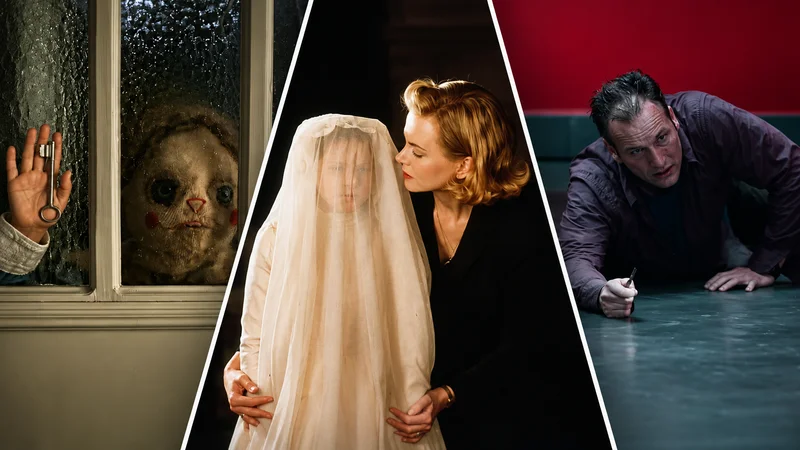
Ordinary objects become terrifying when their rules are unknown. A videotape, photograph, mirror, or wooden figure can make a supernatural story feel personal because the threat enters through something recognizable.
22. Ring (Ringu) (1998)
- Style: Japanese cursed videotape mystery
- Mood: Cold, patient, and inescapable
- Best for: Viewers who enjoy supernatural investigations
Hideo Nakata follows journalist Reiko Asakawa as she investigates a disturbing videotape associated with a series of deaths. After watching it, she faces an urgent deadline and searches for the meaning behind its fragmented images. The investigation moves through family history and ominous clues while an ordinary television becomes a source of dread.
Ring helped bring Japanese ghost horror to a much wider international audience. Its power lies in restraint and the conviction that the curse cannot be ignored. The 1998 Japanese film should not be confused with the separate American remake The Ring from 2002.
23. Shutter (2004)
- Style: Thai ghost-photography mystery
- Mood: Creeping, guilt-ridden, and unsettling
- Best for: Fans of visual clues and hidden pasts
Banjong Pisanthanakun and Parkpoom Wongpoom follow a photographer and his girlfriend after an unsettling road accident. Strange figures begin appearing in photographs, leading the couple toward incidents and relationships that have not been openly discussed. The camera becomes both evidence and a reminder that certain truths cannot remain outside the frame.
The haunting has a clear emotional connection to secrecy and responsibility, giving the visual scares more weight than a simple succession of apparitions. This is the original Thai release from 2004, not the American remake from 2008.
24. Ju-on: The Grudge (2002)
- Style: Japanese house-bound curse
- Mood: Fragmented, merciless, and eerie
- Best for: Viewers who enjoy nonlinear supernatural stories
Takashi Shimizu connects different characters through a house marked by a violent past. People who enter it find that the consequences of the original events can follow them beyond the property. Rather than tracing one investigator’s progress, the story moves between incidents and viewpoints, inviting viewers to reconstruct how the curse spreads.
Its use of ordinary domestic spaces, frightening sounds, and unexpected appearances influenced a generation of ghost films. The 2002 production also has an early-2003 Japanese theatrical date in some catalogs. It is distinct from the 2004 English-language remake.
25. Sinister (2012)
- Style: Cursed home-movie investigation
- Mood: Bleak, obsessive, and unnerving
- Best for: Viewers disturbed by recorded images
Scott Derrickson follows crime writer Ellison Oswalt after he moves his family into a house associated with a terrible death. He discovers old films showing alarming events and becomes absorbed in finding the connection between them. Ethan Hawke portrays a father whose determination to revive his career makes it difficult to stop searching when the evidence becomes threatening.
The home movies provide a frightening contrast to ordinary family life, and the sound design deepens the unease. Sinister asks whether a person’s pursuit of disturbing material can expose loved ones to danger. Its violent imagery and family themes make it more severe than an accessible haunted-house adventure.
26. Oculus (2013)
- Style: Haunted-mirror supernatural mystery
- Mood: Twisty, disorienting, and tense
- Best for: Viewers who like unreliable time and perception
Mike Flanagan follows siblings Kaylie and Tim as they confront a mirror they believe caused frightening events during their childhood. Kaylie devises a carefully documented attempt to prove its influence, but the device appears capable of distorting memories and immediate experience. Karen Gillan and Brenton Thwaites portray siblings with sharply different understandings of their past.
The mirror is frightening because it undermines the evidence the characters use to protect themselves. Intercut timelines make the story deliberately challenging, but the structure reinforces the central fear of not trusting one’s senses. It is a rewarding puzzle for viewers who appreciate psychological supernatural horror.
27. Talk to Me (2023)
- Style: Possession ritual among friends
- Mood: Contemporary, reckless, and emotionally painful
- Best for: Viewers seeking fast supernatural scares
Danny and Michael Philippou follow teenagers who discover that an embalmed hand can briefly connect them with spirits. What begins as a party thrill becomes dangerous when the group ignores rules meant to limit the experience. Mia, played by Sophie Wilde, faces particular temptation because grief makes supernatural contact seem personally meaningful.
The social ritual gives the possession premise a sharp modern edge: friends encourage risks that none of them understand. Physical effects and direct scares are forceful, while the underlying story remains one of vulnerability and loss. The film premiered in 2022 before its widely recognized 2023 theatrical release.
28. Oddity (2024)
- Style: Cursed-object ghost mystery
- Mood: Precise, suspenseful, and uncanny
- Best for: Fans of eerie objects and contained whodunits
Damian Mc Carthy follows Darcy, a blind medium investigating the suspicious death of her twin sister Dani. She arrives at a remote country house with a disturbing life-size wooden figure, forcing the occupants to confront questions they would rather avoid. Carolyn Bracken plays both sisters, giving the supernatural mystery a personal emotional foundation.
The film makes quiet spaces and a motionless figure unnerving through precise framing and patient staging. Its rural house is more than an attractive location; the architecture shapes what people can see or escape. Oddity is a strong recent choice for viewers who want an inventive paranormal puzzle without a sprawling mythology.
The best paranormal horror movies involving cursed objects make their props unforgettable. Ring and Shutter turn images threatening; Oddity achieves similar unease through a wooden figure.
Found Footage, Mockumentaries, and Paranormal Cameras
These films make restricted vision frightening. Recovered recordings, interviews, video calls, and ghost-hunting shows hide what viewers most want to know.
29. The Blair Witch Project (1999)
- Style: Forest-legend found footage
- Mood: Raw, anxious, and disorienting
- Best for: Fans of unseen supernatural threats
Daniel Myrick and Eduardo Sánchez follow three film students as they enter the Maryland woods to make a documentary about a local legend. They become lost, encounter unexplained disturbances, and gradually lose confidence in one another. Their cameras record fragments rather than providing the calm overview viewers expect from an ordinary horror film.
Its most important creative choice is rarely revealing a clear source for the danger. The empty forest and deteriorating relationships make imagination do the frightening work. The marketing famously encouraged speculation about authenticity, but the events and supposed footage form a fictional movie.
30. Paranormal Activity (2007)
- Style: Bedroom-camera supernatural haunting
- Mood: Minimalist, slow, and intensely watchful
- Best for: Viewers who enjoy tiny changes in still frames
Oren Peli follows Katie and Micah as they place a camera in their bedroom to document disturbing nighttime incidents. The seemingly simple recording system captures sounds and movements that strain the couple’s attempts to understand what is happening. Their disagreements over how to respond become increasingly important as the experiences grow more threatening.
The film turns ordinary silence into suspense by making viewers examine the edges of a stationary frame. It premiered at Screamfest in 2007 and reached much wider theatrical audiences in 2009. Its small-scale approach changed expectations about what supernatural horror could achieve with limited resources.
31. Noroi: The Curse (2005)
- Style: Japanese occult documentary mystery
- Mood: Layered, patient, and deeply strange
- Best for: Viewers who enjoy assembling disconnected clues
Kōji Shiraishi presents a paranormal investigator tracking incidents through interviews, television clips, and recordings that appear unrelated at first. Strange behavior and contradictory testimonies gradually suggest a larger occult pattern. The film imitates an assembled documentary instead of maintaining one continuous handheld-camera perspective.
Noroi rewards attentive viewing because details that initially seem incidental may become important later. Its supernatural mythology feels extensive precisely because no one character can explain the entire situation. It is particularly well suited to viewers who enjoy investigating a fictional archive.
32. Lake Mungo (2008)
- Style: Australian ghost mockumentary
- Mood: Quiet, sorrowful, and subtly chilling
- Best for: Viewers interested in grief and photographic evidence
Joel Anderson presents the Palmer family’s experiences after teenage daughter Alice drowns. Interviews, family photographs, and recordings suggest that the people closest to her may not have understood her private life. Her brother experiments with cameras in an attempt to make sense of strange disturbances at home.
The documentary format allows grief to shape how images are interpreted, and the film does not rush to settle every uncertainty. Its emotional restraint makes a few specific discoveries unusually powerful. Lake Mungo is widely cataloged as a 2008 Australian film, despite some later international-release dates.
33. Gonjiam: Haunted Asylum (2018)
- Style: South Korean ghost-hunt livestream
- Mood: Immediate, escalating, and frightening
- Best for: Viewers who want strong on-camera scares
Jung Bum-shik follows the crew of a web horror show as they enter a supposedly haunted psychiatric hospital hoping to attract an enormous online audience. Mounted cameras and remote production plans create a layer of apparent control that vanishes when the building begins behaving unpredictably. The performers’ growing panic becomes part of the show they intended to manufacture.
The abandoned location and digital-broadcast format give the film a recognizable contemporary frame. It moves from performative fear toward a sense that the crew has misjudged the situation. The haunting is fictional even though a real location’s reputation helped inspire the premise.
34. Host (2020)
- Style: Video-call séance horror
- Mood: Brief, immediate, and claustrophobic
- Best for: Viewers seeking an inventive short feature
Rob Savage follows friends conducting an online séance during pandemic lockdown. Each participant joins from a separate home, but unexplained events soon make the digital meeting feel like a network of isolated haunted rooms. The restricted view of each camera becomes a disadvantage when characters need to know what is happening beyond their screens.
Host is especially effective because a familiar interface supplies both its setting and its limits. The compact runtime leaves little space for relief. It is the 2020 British supernatural film, not Bong Joon-ho’s unrelated Korean monster movie The Host (2006).
35. The Taking of Deborah Logan (2014)
- Style: Medical-documentary possession horror
- Mood: Uncomfortable, intimate, and increasingly alarming
- Best for: Adults interested in caregiving and supernatural uncertainty
Adam Robitel presents a documentary crew recording the life of Deborah Logan, an older woman living with Alzheimer’s disease. As the project continues, unsettling behavior and unexplained incidents suggest that the situation may involve something beyond the family’s initial understanding. Jill Larson brings a powerful presence to the title role, while her daughter’s concern gives the story emotional stakes.
Its distinctive feature is the collision between caregiving anxiety and possession-film conventions. Some scenes can be deeply upsetting, and the movie should not be treated as a realistic account of dementia. The medical context is a dramatic premise within a fictional supernatural story.
Among the best paranormal horror movies built on recordings, Lake Mungo favors interpretation while Host and Gonjiam deliver quicker scares.
How to Choose a Paranormal Horror Movie for Your Night
For beginners exploring the best paranormal horror movies, The Sixth Sense, The Others, and The Conjuring offer accessible mysteries. The Changeling and The Haunting move more slowly, while Insidious and Poltergeist favor visible apparitions. Start with a puzzle if you prefer uncertainty, or a more energetic film for direct scares.
For a varied marathon, pair Ring with Shutter to compare cursed images, or The Wailing with The Medium for rituals in different Asian settings. The Witch and A Dark Song focus on how belief develops. Their fictional supernatural practices should not be treated as factual information about religion.
For camera-based suspense, The Blair Witch Project and Lake Mungo reward patience. Paranormal Activity relies on a stationary frame, while Gonjiam and Host offer quicker scares. Noroi presents the densest documentary puzzle. Viewers sensitive to shaky footage may prefer Lake Mungo or Host.
Content sensitivity matters. Hereditary, The Dark and the Wicked, When Evil Lurks, and The Taking of Deborah Logan involve distressing family themes or bodily harm. The Exorcist and The Exorcism of Emily Rose raise difficult questions about faith. Check classifications for violence, suicide, illness, and child endangerment.
Frequently Asked Questions
What is the difference between paranormal and supernatural horror?
The terms overlap, but paranormal horror usually emphasizes hauntings, apparitions, possession, unexplained spiritual phenomena, and attempts to investigate them. Supernatural horror is a wider label that can also include vampires, werewolves, and other impossible creatures. For this guide, the selected films feature ghosts, demons, curses, rituals, or an apparently otherworldly presence rather than a purely human attacker.
Which paranormal horror movies are best for beginners?
The Others and The Sixth Sense offer accessible mysteries with strong emotional stories, while The Conjuring provides more direct haunted-house scares. Poltergeist and Insidious are energetic choices for viewers comfortable with frightening supernatural images. The Haunting and The Changeling are quieter classics. None of these is automatically appropriate for children, so check the classification and content advisories first.
Are The Conjuring and The Exorcist based on real events?
Both films have associations with reported cases or experiences, but their paranormal events are dramatized. Historical claims about possessions and hauntings are not scientific confirmation that supernatural forces caused them. The best way to approach these movies is as fictional horror shaped by religious ideas, public stories, and filmmaking choices rather than factual documentaries.
What are the best found-footage paranormal horror films?
The Blair Witch Project emphasizes fear of an unseen forest threat, and Paranormal Activity turns overnight recordings into suspense. Noroi: The Curse uses interviews and television clips, while Lake Mungo resembles a family documentary. Gonjiam: Haunted Asylum and Host offer more immediate camera-based scares. The best option depends on whether you enjoy slow evidence gathering or rapid supernatural danger.
Which paranormal horror movies are the most disturbing?
Hereditary, The Dark and the Wicked, When Evil Lurks, and The Taking of Deborah Logan can be particularly upsetting because they combine supernatural threats with intense family suffering or disturbing imagery. The Exorcist and The Medium are also demanding. The severity of a film is subjective, so detailed warnings about violence, illness, and child endangerment are more useful than a numerical scare score.
Final Thoughts
The best paranormal horror movies connect unseen forces to human fears. The Changeling investigates grief, Ring makes ordinary media dangerous, The Conjuring foregrounds family protection, and The Wailing turns uncertainty into communal panic. Each gives its frightening premise a personal reason to matter.
Choose The Others for elegant suspense, Insidious for energetic scares, Oddity for a haunted-object mystery, or Noroi for a demanding documentary puzzle. Hereditary and When Evil Lurks offer harsher experiences. Match the intensity to the people watching.