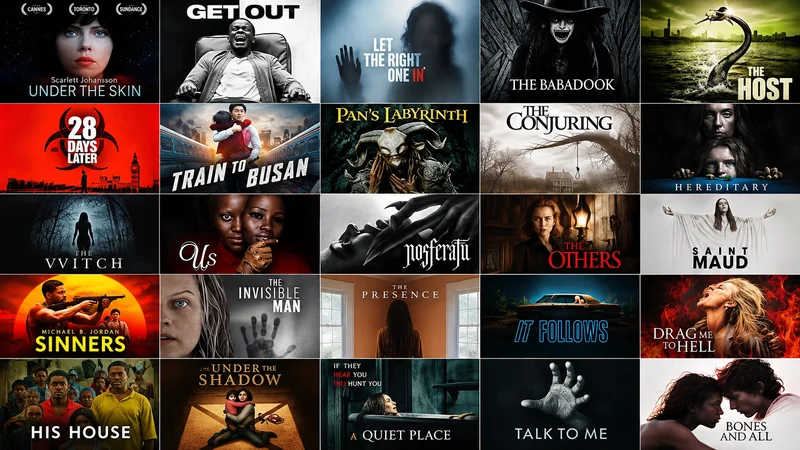
The best modern horror movies prove that fear has changed dramatically in the twenty-first century. A dinner with strangers can become a social nightmare, a family tragedy can conceal an occult mystery, and a familiar computer screen can feel as threatening as a haunted mansion. This Top 35 spans 2000 through 2025, combining influential classics with recent films that pushed the genre toward new subjects, images, and storytelling styles.
For readers building a watchlist through NetShort, this selection covers psychological suspense, possession, found footage, survival horror, international cinema, and disturbing physical transformations. Some entries rely on suggestion and silence, while others contain intense violence or deeply upsetting family stories. Their differences matter more than an invented rating of how frightening each film is.
Use this guide to the best modern horror movies to find a story that matches your tolerance for suspense, disturbing images, and emotional weight. Every title has quick viewing cues and an individual explanation of its appeal. The list avoids major ending spoilers and does not assume that every film is appropriate for teenagers or currently available on a particular streaming service.
What Makes Modern Horror So Memorable?
- Subgenres: Psychological horror, supernatural hauntings, folk horror, outbreak thrillers, creature features, and body horror.
- Moods: Quiet dread, violent survival, bleak family drama, unsettling mystery, and occasional dark humor.
- Modern themes: Identity, grief, surveillance, social inequality, isolation, bodily autonomy, and the fear of losing control.
- Storytelling tools: Practical effects, digital imagery, unconventional sound, handheld cameras, and carefully restricted viewpoints.
- Audience fit: Some are accessible genre introductions; others demand patience or a strong tolerance for distressing content.
The best modern horror movies are not always those with the highest body counts. This list favors memorable premises, distinctive direction, cultural influence, and variety across countries and production styles. The numbered entries create a practical viewing route, not a scientific ranking. Where a film premiered at a festival before receiving a wider release, the year follows a recognized release identity and is clarified where useful.
Psychological Horror, Social Fear, and Folk Nightmares
These seven films turn private anxieties and familiar relationships into frightening territory. Their monsters may be supernatural, symbolic, or difficult to identify, but their emotional conflicts are recognizable.
1. Get Out (2017)
- Style: Social horror and psychological thriller
- Tone: Suspicious, sharp, and darkly funny
- Best for: Viewers who enjoy tension with cultural commentary
Jordan Peele follows Chris, a Black photographer visiting the wealthy white family of his girlfriend Rose for the first time. The weekend begins with unnervingly polite conversation and grows stranger as Chris notices how the household treats its Black guests and staff. Daniel Kaluuya gives the central character a grounded perspective that keeps the escalating mystery personal.
Get Out transforms seemingly minor social interactions into clues that demand attention. It is frightening not because everyone behaves obviously monstrous, but because Chris must constantly judge which signals to trust. Peele’s humor sharpens the discomfort rather than interrupting it.
2. Hereditary (2018)
- Style: Family tragedy and occult horror
- Tone: Devastating, severe, and oppressive
- Best for: Adults prepared for relentless emotional tension
Ari Aster’s debut centers on the Graham family after the death of its matriarch. Annie, her husband, and their children experience a series of increasingly disturbing events while long-hidden family tensions rise to the surface. Toni Collette’s portrayal of grief makes even a quiet dinner feel unstable. The supernatural possibilities become more alarming as the family’s understanding of its past changes.
The film’s carefully arranged interiors suggest that the characters are being observed or manipulated by forces beyond them. Its most upsetting moments are inseparable from guilt, bereavement, and the fear of passing suffering to children.
3. The Babadook (2014)
- Style: Psychological monster horror
- Tone: Exhausted, intimate, and unnerving
- Best for: Viewers interested in grief and motherhood
Jennifer Kent follows Amelia, a widowed mother whose young son Samuel becomes convinced that a frightening figure from a picture book is real. His behavior and Amelia’s lack of sleep put enormous pressure on their already fragile household. As the book’s images seem to invade daily life, the audience is left to consider the relationship between the apparent monster and the family’s unresolved pain.
The Babadook turns ordinary parenting exhaustion into an atmosphere that feels almost physically inescapable. Its most important achievement is making Amelia’s emotional state central without reducing the story to a simple diagnosis. The creature’s striking design is memorable, yet the real terror is the possibility of losing control in the place where a child needs protection.
4. It Follows (2014)
- Style: Suburban supernatural curse
- Tone: Dreamlike, patient, and quietly alarming
- Best for: Fans of simple rules and background suspense
David Robert Mitchell introduces Jay, a young woman who learns that a relentless supernatural threat can be transferred through sexual contact. The entity can resemble anyone and approaches at an ordinary walking pace. Friends attempt to help her survive, but the film never allows the viewer to feel certain that a seemingly innocent figure in the distance is harmless.
The most ingenious element is the way a simple rule changes how audiences inspect every frame. Open streets and sunny suburban spaces become uncomfortable because danger might be visible long before the characters notice. Its electronic score and unusual sense of time add a lingering unease.
5. Midsommar (2019)
- Style: Daylight folk horror
- Tone: Ritualistic, emotionally raw, and disturbing
- Best for: Viewers who like cultural and relationship horror
Following a personal tragedy, Dani joins her boyfriend and his friends on a trip to a Swedish midsummer festival held by an isolated community. The celebrations initially appear beautiful and welcoming, but the visitors gradually confront customs they do not understand. Florence Pugh gives Dani’s grief and need for belonging a compelling emotional center.
Ari Aster’s choice to place much of the horror under brilliant daylight makes the film distinctive. Unsettling rituals unfold in open spaces instead of dark corridors, and the central relationship becomes as uncomfortable as the increasingly strange environment.
6. The Lighthouse (2019)
- Style: Black-and-white maritime psychological horror
- Tone: Claustrophobic, surreal, and abrasive
- Best for: Viewers who enjoy ambiguity and difficult personalities
Robert Eggers confines two lighthouse keepers, played by Willem Dafoe and Robert Pattinson, to an isolated island where work routines and a harsh power imbalance breed resentment. Bad weather, alcohol, and increasingly strange experiences wear down their sense of reality. The film relies on conversation and physical surroundings as much as on any explicit supernatural explanation.
Its narrow image format and stark photography make the setting feel like a prison with an ocean around it. The language is often funny in an abrasive way, yet the central relationship grows progressively threatening.
7. Saint Maud (2019)
- Style: Religious psychological horror
- Tone: Intimate, austere, and obsessive
- Best for: Fans of unreliable perspectives and spiritual dread
Rose Glass follows Maud, a deeply religious private nurse caring for Amanda, a seriously ill former dancer. Maud becomes increasingly convinced that saving her patient’s soul is a personal mission. Their conflicting beliefs create tension in a quiet coastal setting, while Maud’s isolation makes it difficult to distinguish divine certainty from something more troubling.
Saint Maud is compact but intense, building much of its discomfort around facial expression, sound, and the intimacy of caregiving. The story is less concerned with elaborate possession effects than with what happens when absolute conviction overrides another person’s wishes. It premiered in 2019, though release schedules varied afterward, and its emotional severity warrants a careful content check.
For readers deciding among the best modern horror movies, this group is particularly rich in private fears: relationships, beliefs, and grief shape the scares long before a monster appears.
Hauntings, Possession, and Places With Hidden Histories
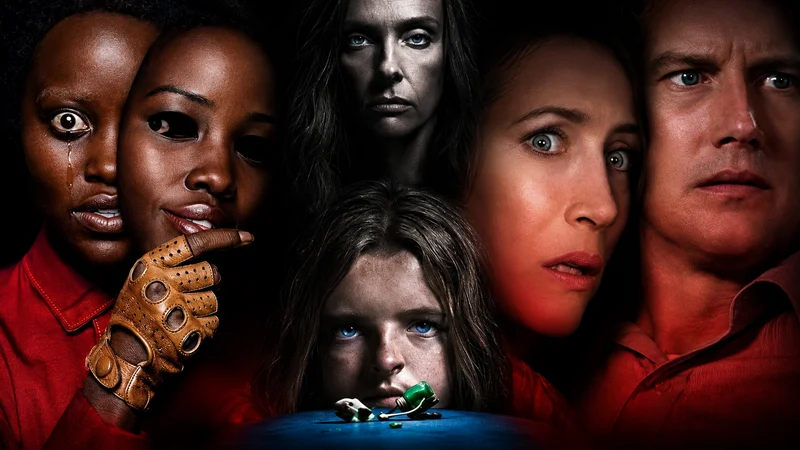
Some of the best modern horror movies revive the haunted-house tradition by giving ghosts a compelling personal or investigative mystery. These films use architecture, family secrets, and the possibility of contact with the dead to create different kinds of unease.
8. The Conjuring (2013)
- Style: Period paranormal investigation
- Tone: Classical, tense, and jump-scare driven
- Best for: Fans of accessible supernatural horror
James Wan follows the Perron family as frightening events disturb their Rhode Island farmhouse. Paranormal investigators Ed and Lorraine Warren are called in when ordinary explanations seem increasingly inadequate. The film places its vulnerable family at the center of the haunting, giving each escalation a clear emotional purpose rather than treating the house merely as a collection of spooky rooms.
Wan combines patient camera movement, carefully timed sounds, and memorable apparitions into a polished studio fright experience. Although promoted as inspired by reported cases, its supernatural events are dramatized, not verified evidence about real hauntings.
9. Sinister (2012)
- Style: True-crime mystery and supernatural terror
- Tone: Bleak, obsessive, and deeply unsettling
- Best for: Viewers unnerved by disturbing recordings
Scott Derrickson follows Ellison Oswalt, a crime writer who moves his family into a house linked to a gruesome death in hopes of finding material for a book. A collection of home movies soon reveals connections to other tragedies. Ethan Hawke captures a man whose hunger for professional success keeps him watching material he should arguably abandon.
The film’s strongest tool is the contrast between quiet domestic scenes and the terrible possibilities hidden inside old recordings. Its eerie sound design makes the footage difficult to forget.
10. The Autopsy of Jane Doe (2016)
- Style: Single-location forensic mystery
- Tone: Clinical, claustrophobic, and uncanny
- Best for: Fans who like solving a frightening puzzle
André Øvredal places a father and son, both coroners, in a morgue where they must examine an unidentified young woman. Each discovery challenges ordinary medical explanation while strange events begin unsettling the building. Brian Cox and Emile Hirsch provide a grounded professional relationship that makes the growing impossibility more convincing.
Its economical setting gives the filmmakers complete control over audience attention. The body rarely needs to move for the situation to feel wrong; the careful work of examination makes each contradiction disturbing.
11. The Night House (2020)
- Style: Grief-centered architectural haunting
- Tone: Lonely, disorienting, and atmospheric
- Best for: Viewers who appreciate visual puzzles
David Bruckner follows Beth, a widow living alone in the lakeside home her late husband designed. Strange sounds and discoveries about his past challenge the comforting image she had of their marriage. Rebecca Hall’s performance gives Beth a sharp, often angry response to grief instead of portraying her as a passive victim of supernatural forces.
The house itself becomes a visual riddle, with negative space and reflections suggesting presences that may not be visible directly. The film premiered at Sundance in 2020 before receiving wider release in 2021.
12. Talk to Me (2023)
- Style: Youth-centered possession horror
- Tone: Immediate, reckless, and emotionally painful
- Best for: Viewers who enjoy contemporary peer-pressure stories
Australian filmmakers Danny and Michael Philippou introduce friends who discover that an embalmed hand can briefly connect them with spirits. What begins as a thrilling party ritual becomes dangerous when the group ignores the limits meant to control it. Sophie Wilde plays Mia, whose personal grief makes the temptation of supernatural contact especially powerful.
The film gives an old possession premise a modern social context: people watch, record, and cheer as friends take risks they cannot fully understand. Its practical effects and abrupt scares have considerable force, but the deeper fear concerns vulnerability and the choices made around it. The 2023 date refers to its widely recognized theatrical release following a 2022 festival premiere.
13. The Others (2001)
- Style: Gothic haunted-house mystery
- Tone: Restrained, elegant, and persistently uneasy
- Best for: Viewers who prefer shadows and uncertainty
Alejandro Amenábar sets this story on an isolated estate after World War II, where Grace cares for two children who must avoid strong light. New servants arrive as Grace begins suspecting that other presences inhabit the house. Nicole Kidman gives the mother’s rigid routines an anxious intensity, making every unexplained disturbance feel like a threat to the family.
The Others demonstrates how to build suspense through closed doors, dim rooms, and incomplete information rather than graphic violence. Its mystery rewards viewers who avoid spoilers.
14. The Orphanage (2007)
- Style: Spanish ghost story and family mystery
- Tone: Melancholy, tense, and compassionate
- Best for: Viewers seeking an emotional supernatural film
J. A. Bayona follows Laura, who returns to the seaside orphanage where she spent part of her childhood, hoping to reopen it as a home for children. When her young son disappears, unsettling clues suggest links between the building’s history and the present. Belén Rueda anchors the investigation with mounting desperation.
The Orphanage is frightening partly because the central mystery grows from parental fear rather than from a desire to chase ghosts. Its atmospheric spaces and carefully planted details make it absorbing as a puzzle, while the themes of childhood and loss lend the story emotional weight.
International Horror That Changed the Genre’s Language
Horror from South Korea, Japan, Spain, Thailand, and Argentina expands what a frightening story can look and sound like. These seven films use local settings and distinctive narrative traditions rather than simply repeating familiar Hollywood formulas.
15. The Wailing (2016)
- Style: Korean supernatural mystery
- Tone: Feverish, uncertain, and increasingly frightening
- Best for: Patient viewers who enjoy complex clues
Na Hong-jin follows a rural police officer as disturbing deaths and unexplained illness spread through a village. Suspicion falls on a mysterious outsider, but each attempted explanation raises further questions. The officer’s concern for his daughter gives the investigation urgency, while local religious and spiritual practices complicate the idea that one person possesses the whole truth.
The Wailing excels at turning uncertainty into a sustained threat. Characters act on incomplete information, making every decision potentially disastrous. Its mix of folk belief, investigative suspense, and family terror requires attention and patience, but the payoff is a deeply unsettling experience.
16. Train to Busan (2016)
- Style: Korean zombie survival thriller
- Tone: Propulsive, emotional, and tense
- Best for: Viewers who want action and recognizable characters
Yeon Sang-ho traps passengers aboard a train as a zombie outbreak spreads across South Korea. A work-focused father traveling with his daughter must cooperate with strangers while the infection overtakes successive carriages. The confined space makes survival a test of both quick thinking and willingness to help people outside one’s immediate family.
Its remarkable momentum never entirely eclipses the people caught in the disaster. The film reveals character through split-second choices about who deserves protection, adding a social edge to its high-speed action.
17. The Host (2006)
- Style: Korean monster movie and family satire
- Tone: Frightening, eccentric, and politically pointed
- Best for: Fans of creature features with social commentary
Bong Joon-ho introduces a family whose young daughter is taken by a strange creature emerging from the Han River. The relatives launch an improvised rescue while government responses and public panic create additional obstacles. Song Kang-ho leads an ensemble of imperfect people whose stubborn affection is more reliable than their planning.
The creature provides spectacular danger, but the movie’s personality comes from its willingness to let fear and absurdity occupy the same scene. Bureaucratic confusion becomes almost as frustrating as the monster itself.
For viewers drawn to lower-budget international discoveries, our best indie horror movies guide offers a complementary route through unusual filmmaking styles. The present list is broader, including major studio releases alongside independently produced works, with the focus on how each film shaped or refreshed modern horror.
18. [REC] (2007)
- Style: Spanish found-footage outbreak horror
- Tone: Panicked, cramped, and immediate
- Best for: Fans of breathless handheld-camera suspense
Reporters following firefighters into a Barcelona apartment building find themselves trapped when authorities seal the exits. As residents become violently ill, the camera records a desperate struggle for information and escape. Directors Jaume Balagueró and Paco Plaza use the news-reporting premise to justify why the increasingly dangerous situation remains on screen.
The apartment’s staircases and narrow rooms amplify uncertainty, while the handheld format keeps the audience close to every mistake. Unlike a slower documentary-style mystery, [REC] becomes increasingly frantic as its occupants lose control.
19. When Evil Lurks (2023)
- Style: Argentine demonic infection horror
- Tone: Brutal, fatalistic, and relentless
- Best for: Experienced viewers comfortable with disturbing violence
Demián Rugna follows brothers Pedro and Jimmy after they discover that a dangerous supernatural presence is spreading near their rural community. Their attempts to contain it collide with a set of rules they do not fully understand. The setting makes the threat feel communal rather than confined to one household, and the consequences of ordinary mistakes become extreme.
The film is particularly effective because its characters act out of fear and concern yet repeatedly make matters worse. Graphic events arrive without the reassuring rhythm of conventional possession movies. This is one of the harshest selections on the list, especially for viewers sensitive to violence involving vulnerable people, but its uncompromising logic is distinctive.
20. The Medium (2021)
- Style: Thai-Korean-produced folk possession mockumentary
- Tone: Observational at first, then increasingly intense
- Best for: Viewers interested in ritual and regional belief
Banjong Pisanthanakun follows a documentary crew recording the life of Nim, a spirit medium in rural Thailand, as troubling behavior emerges within her family. The filmmakers gradually recognize that the situation may involve something more dangerous than a familiar spiritual inheritance. The camera crew’s apparent neutrality becomes difficult to maintain when disturbing events escalate.
The Medium stands out for how it uses a patient documentary approach to introduce its cultural setting before tightening into an oppressive supernatural ordeal. The film’s spiritual details are part of the fiction, not proof of any real ritual’s power.
21. Noroi: The Curse (2005)
- Style: Japanese occult mockumentary
- Tone: Investigative, layered, and quietly ominous
- Best for: Fans of connecting fragments of evidence
Kōji Shiraishi constructs a documentary investigation around a paranormal researcher following strange incidents that initially seem unrelated. Interviews, television appearances, and unsettling recordings gradually point toward a larger supernatural mystery. Rather than showing one character holding a camera through every scene, the film imitates an edited television investigation.
Its strength is the feeling that an immense, disturbing pattern lies just beyond the available evidence. The viewer becomes an active investigator, comparing clues and questioning the reliability of witnesses.
The best modern horror movies from different countries reward curiosity about their settings. [REC] emphasizes immediate panic, while The Wailing and Noroi build mysteries that demand careful attention.
Survival Horror, Creatures, and Contemporary Threats
The best modern horror movies also thrive on clear physical threats: infected cities, underground predators, sound-sensitive monsters, and dangerous people who conceal their intentions. What matters is how inventive filmmaking makes familiar survival situations feel unpredictable.
22. 28 Days Later (2002)
- Style: British outbreak survival horror
- Tone: Urgent, bleak, and socially anxious
- Best for: Fans of post-apocalyptic suspense
Danny Boyle follows Jim, a bicycle courier who awakens from a coma to discover that a rage-inducing infection has devastated Britain. He searches for survivors through eerily empty streets and encounters people whose desperation creates new forms of danger. The digital cinematography gives the deserted urban landscape a raw, unfamiliar texture.
More than a fast-moving infected-person thriller, the film asks what remains of social obligation after institutions collapse. Its moments of quiet isolation are as important as the frantic attacks.
23. The Descent (2005)
- Style: Cave survival and creature horror
- Tone: Claustrophobic, physical, and punishing
- Best for: Viewers who want sustained fear in tight spaces
Neil Marshall takes a group of women on a caving expedition that quickly becomes dangerous after they enter an unfamiliar system of underground passages. Previous emotional tensions threaten their cooperation even before they discover they are not alone. The darkness and difficult terrain make navigation terrifying without any creature having to appear.
The Descent earns its reputation through spatial control: the audience often cannot tell where safety might exist. Relationships under pressure add a human dimension to the survival story. Its violence and claustrophobia can be overwhelming, and different release cuts are associated with different endings, so a viewer should check which edition is being shown.
24. A Quiet Place (2018)
- Style: Family survival creature feature
- Tone: Restrained, tender, and sharply suspenseful
- Best for: Viewers drawn to sound-based tension
John Krasinski follows a family trying to survive in a world where deadly creatures hunt by sound. Their daily routines depend on silence, sign language, and careful preparation. Emily Blunt and the young cast give the situation emotional weight, especially because parenting requires reassurance and communication when even a small noise can attract danger.
The movie turns sound itself into a source of suspense, encouraging the audience to notice every footstep and accidental movement. Its central rule is immediately understandable, allowing viewers to participate in the family’s decisions.
25. The Invisible Man (2020)
- Style: Technological stalking and psychological thriller
- Tone: Tense, angry, and relentlessly suspicious
- Best for: Viewers who like threats hidden in plain sight
Leigh Whannell follows Cecilia after she escapes an abusive relationship with a wealthy technology specialist. When unsettling incidents begin, she fears that her former partner has found a way to stalk her without being seen. Elisabeth Moss anchors the film as a woman struggling to persuade others to believe what she experiences.
The clever use of empty rooms and carefully positioned cameras makes ordinary space feel dangerous. The central horror is not simply invisibility but the social isolation created when a victim’s account is dismissed. The story includes coercive control and domestic abuse, so its intensity comes from recognizable human fears as much as from thriller mechanics.
26. Barbarian (2022)
- Style: Urban mystery and underground horror
- Tone: Unpredictable, uncomfortable, and darkly funny
- Best for: Viewers who prefer minimal advance information
Zach Cregger begins with Tess arriving at a rental house in Detroit to discover another guest already occupying it. A seemingly ordinary accommodation problem becomes increasingly disturbing as she tries to work out whom to trust and whether the building is safe. Georgina Campbell gives Tess a grounded, cautious response to a situation that keeps changing its rules.
Barbarian is best enjoyed without a detailed plot synopsis because the shifts in perspective form much of its appeal. It is funny in places, but the comedy never makes its darker material harmless.
27. Weapons (2025)
- Style: Community mystery and supernatural horror
- Tone: Unsettling, twisty, and occasionally darkly comic
- Best for: Viewers who enjoy puzzles told from several angles
In Zach Cregger’s follow-up to Barbarian, nearly all the children in a single classroom disappear on the same night, leaving a community searching for an explanation. Adults react with suspicion, grief, and competing theories about who bears responsibility. The film expands its perspective beyond one frightened protagonist to examine how a town responds to an apparently impossible event.
Weapons is a strong recent example of an original high-concept premise that does not depend on a familiar franchise. Its tonal shifts and layered structure are key attractions, so detailed plot revelations would diminish the surprise. The disappearance of children and later violent material make it more suitable for mature horror audiences.
28. Sinners (2025)
- Style: Period vampire horror with music and drama
- Tone: Energetic, soulful, and increasingly violent
- Best for: Viewers who value character, music, and genre mixing
Ryan Coogler follows twin brothers, both played by Michael B. Jordan, who return to their Mississippi hometown hoping to build a new life through a juke joint. Their celebration becomes entangled with a supernatural threat. Set against the realities of the American South, the story combines relationships, music, historical tension, and vampire horror.
Sinners stands apart because its music and community setting are central rather than decorative. The supernatural danger intensifies an already richly drawn social world, and the filmmaking moves confidently between drama, humor, and violent action.
Body Horror, Media Nightmares, and New Visions of Fear
These final seven films stretch horror through bodily transformation, distorted identity, unsettling broadcasts, and disturbing relationships. Several are exceptionally graphic or emotionally severe, while others create tension from creative technical limitations.
29. The Substance (2024)
- Style: Beauty-industry body horror and satire
- Tone: Grotesque, exaggerated, and confrontational
- Best for: Adults who enjoy social criticism through practical effects
Coralie Fargeat follows Elisabeth Sparkle, a performer pushed aside by a youth-obsessed entertainment industry. A mysterious treatment offers the possibility of a younger self, but maintaining the arrangement demands obedience to strict rules. Demi Moore and Margaret Qualley embody a conflict between self-image, public approval, and the desire to escape aging.
Its increasingly extreme transformations make the body a battleground for social pressure. The film’s outrageous excess is part of its satire, not simply an attempt to display gore.
30. Raw (2016)
- Style: French coming-of-age body horror
- Tone: Intimate, awkward, and physically unsettling
- Best for: Viewers interested in appetite and identity
Julia Ducournau follows Justine, a young vegetarian beginning veterinary school. A hazing ritual triggers a change in her appetite that leaves her struggling to understand herself. The school environment, her relationship with her sister, and the expectations of her family all complicate her attempts to behave like everyone around her.
Raw is disturbing because its graphic moments feel connected to ordinary growing pains: shame, competition, curiosity, and fear of what adulthood may reveal. The film makes a personal transformation frightening without relying on a traditional supernatural monster.
31. Titane (2021)
- Style: French experimental body horror
- Tone: Transgressive, unpredictable, and strangely tender
- Best for: Adventurous viewers open to surreal storytelling
Julia Ducournau centers Alexia, a woman whose life was marked by a childhood car accident and a titanium plate implanted in her head. Her later experiences lead into a violent, unconventional story about identity, performance, and attachment. The film moves between settings and emotional registers without the comfortable signposts of an ordinary thriller.
Titane’s difficult imagery and unusual symbolism are integral to its effect. Beneath the provocative surface sits a surprising interest in the need to be accepted.
32. Possessor (2020)
- Style: Science-fiction identity horror
- Tone: Cold, violent, and psychologically disorienting
- Best for: Fans of invasive technology and cerebral thrillers
Brandon Cronenberg imagines an assassin working for an organization that uses technology to place her consciousness inside another person’s body. Professional assignments begin to destabilize her own identity and relationships. Andrea Riseborough and Christopher Abbott anchor the film’s disturbing exploration of control, where the distinction between operator and host becomes progressively less secure.
Possessor makes the idea of losing ownership of one’s body frightening both physically and emotionally. Its visual effects are deliberately harsh, and its measured pacing leaves room for the implications to sink in.
33. Late Night with the Devil (2023)
- Style: Found-broadcast supernatural horror
- Tone: Retro, theatrical, and increasingly uneasy
- Best for: Viewers who enjoy television-format experiments
Colin and Cameron Cairnes stage a fictional 1977 late-night television broadcast hosted by Jack Delroy, whose troubled show seeks renewed attention through a Halloween special. Guests connected to paranormal claims become part of a live spectacle that begins slipping beyond the host’s control. David Dastmalchian gives the desperate television personality a compelling center.
The film’s invented broadcast format makes commercial pressure part of the horror: the host wants to keep the cameras rolling even when doing so seems irresponsible. Its 2023 year reflects its festival premiere, with a wider release following in 2024. This is a good choice for fans of inventive presentation and unsettling media satire.
34. Host (2020)
- Style: Video-call supernatural horror
- Tone: Short, fast, and intensely immediate
- Best for: Viewers who like modern found footage
Rob Savage places a group of friends on a video call for an online séance during lockdown. What begins as a social experiment becomes frightening when strange events unfold in their separate homes. The computer interface restricts how much anyone can see or do, making the audience as helpless as the people on screen.
Host shows how limitations can become an artistic strength. A familiar digital environment turns into a set of isolated haunted rooms, and the short runtime leaves little space for relief. Do not confuse this British film with Bong Joon-ho’s 2006 Korean monster movie The Host, which appears earlier in the list.
35. Bring Her Back (2025)
- Style: Foster-family supernatural horror
- Tone: Intimate, cruel, and emotionally intense
- Best for: Experienced viewers interested in grief and manipulation
Danny and Michael Philippou follow siblings Andy and Piper as they enter the care of Laura, a foster parent whose home contains troubling secrets. Sally Hawkins gives Laura a complicated presence that makes apparent kindness difficult to trust. The story gradually reveals a dangerous obsession connected to loss and a disturbing attempt to reverse it.
Bring Her Back takes the directors’ interest in communication with the dead into a more intimate setting than Talk to Me. Rather than treating the horror primarily as a risky game, it examines the dangerous choices grief can inspire.
At their most adventurous, the best modern horror movies reshape the medium itself. Host turns a video call into a trap, while The Substance and Possessor ask who truly controls a body.
Which Modern Horror Movies Should You Watch First?
If you are new to the best modern horror movies, start by deciding whether you prefer a clear mystery or prolonged emotional distress. Get Out, A Quiet Place, and The Conjuring offer accessible storytelling with strong suspense. The Autopsy of Jane Doe is a good choice for viewers who enjoy gradually solving a supernatural puzzle, while The Others delivers a gentler visual approach with carefully controlled information.
For international discoveries, Train to Busan offers immediate action and recognizable emotional stakes, while [REC] delivers an intense confined-space experience. The Wailing and Noroi: The Curse require greater patience and comfort with ambiguity. Sinners demonstrates how music, history, and horror can coexist, while Weapons is a strong recent pick for people who enjoy changing perspectives and community mysteries.
Audience sensitivity matters more than genre labels. Hereditary, When Evil Lurks, The Substance, Titane, and Bring Her Back can be particularly upsetting because of grief, graphic physical damage, or harm involving vulnerable people. The Lighthouse and Saint Maud are quieter but psychologically demanding. Check local content classifications before choosing for teenagers or a group whose comfort levels differ.
It can also be rewarding to compare two films with similar starting points but different priorities. The Conjuring treats paranormal investigation as a family rescue, while Talk to Me makes contact with spirits a dangerous social activity. The Host combines a monster with political satire, while A Quiet Place treats a creature threat as an exercise in family survival. These contrasts are what keep the genre fresh.
Frequently Asked Questions (FAQs)
What counts as a modern horror movie?
In this guide, modern horror means feature films released from 2000 through 2025, allowing early digital-era classics to appear alongside recent hits. Other lists may define modern more narrowly as the past ten or fifteen years. The wider window helps explain how found footage, psychological horror, international thrillers, and contemporary body horror influenced one another across the century.
Which recent horror movies are good for beginners?
Get Out, A Quiet Place, and The Conjuring are reasonable starting points for adults who enjoy suspense but do not want the most extreme material on this list. The Others is another choice for viewers who prefer atmosphere and mystery over gore. None is automatically suitable for children, and each includes frightening scenes that may affect people differently.
What are the best choices for psychological horror fans?
The Babadook, Saint Maud, The Lighthouse, and The Night House emphasize unstable perceptions, private distress, or difficult relationships. It Follows takes a simpler supernatural rule and turns it into sustained anxiety. Hereditary and Midsommar are powerful but more emotionally severe. Pick according to whether you prefer ambiguity, symbolism, or a story with a clearly defined external threat.
Which movies offer the most intense graphic horror?
The Substance, Titane, When Evil Lurks, Possessor, and Bring Her Back contain especially disturbing physical imagery or cruel situations. Raw is also a challenging body-horror film, though its storytelling is more intimate. The severity of a movie is subjective, and violence involving children, coercion, or family grief can affect some viewers more strongly than conventional gore.
Why do some horror films have different release years?
A film can premiere at a festival before opening widely in cinemas or arriving on streaming services. Talk to Me, The Night House, Saint Maud, and Late Night with the Devil are examples where different databases may emphasize different milestones. This list identifies the chosen year consistently and notes particularly relevant cases, rather than treating every differing date as an error.
Final Thoughts
The best modern horror movies reveal an extraordinary variety of fears. Get Out turns a polite weekend into a social nightmare, The Descent makes space itself terrifying, The Substance transforms beauty standards into physical horror, and Sinners finds supernatural danger inside a vibrant musical world. These films work because the frightening imagery grows from a recognizable emotional or cultural tension.
Choose your next film by the experience you want rather than by reputation alone. Start with Get Out for social suspense, Train to Busan for survival action, The Wailing for a demanding mystery, or Weapons for a recent ensemble nightmare. Modern horror remains exciting precisely because its filmmakers keep finding unexpected ways to make familiar life feel uncertain.