
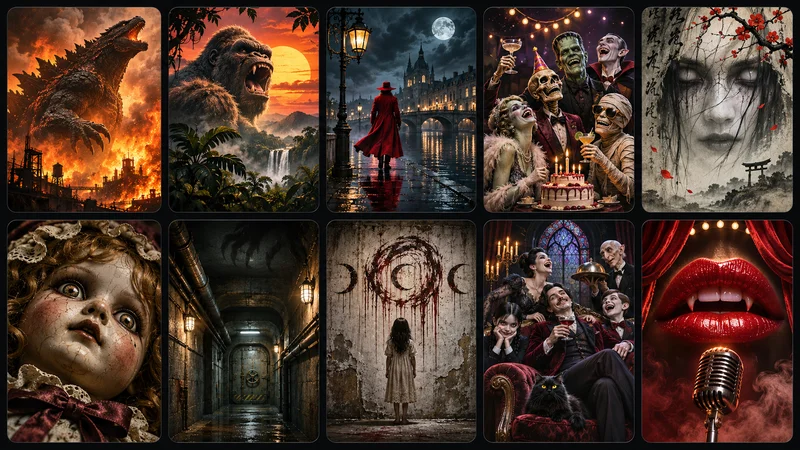
The best gore horror movies do more than cover the screen in blood. Some turn outrageous practical effects into comedy; others use physical transformation, violence, or survival to explore fear and vulnerability. From Peter Jackson’s gleefully excessive Braindead to the disturbing intimacy of The Substance, these 30 films show just how many forms graphic horror can take.
This selection from NetShort spans classic zombie cinema, contemporary slashers, supernatural nightmares, and international extreme horror. The titles are grouped by the experience they offer rather than ranked by an invented gore score. Each entry includes quick viewing cues and a distinct reason it deserves consideration.
If you are searching for the best gore horror movies for your next movie night, start by deciding whether you want mischievous splatter, unsettling body horror, or relentlessly bleak violence. The guide highlights those differences without revealing major endings. Content warning: these films contain graphic injuries, and some also involve torture, sexual threat, or violence against vulnerable characters.
What Makes a Great Gore Horror Movie?
- Subgenres: Splatter comedy, body horror, zombie horror, slashers, and extreme thrillers.
- Visual approach: Practical makeup, creature suits, prosthetics, blood effects, or digital enhancement.
- Mood: Anything from riotous, cartoonish excess to grim psychological endurance.
- Story themes: Infection, identity, survival, obsession, punishment, and loss of bodily control.
- Audience fit: Experienced horror viewers who understand their own limits with graphic imagery.
The best gore horror movies are not necessarily the ones with the highest volume of blood. For this list, selection depends on a film’s documented reputation for graphic effects, the role those effects play in its story, and the variety it adds. Numbering makes the list easy to navigate; it is an editorial viewing route, not a measurable claim that one film is objectively gorier than another.
Splatter Movies That Mix Blood With Dark Humor
These six choices are an entry point for viewers who can handle graphic imagery but prefer absurdity, inventive effects, and a knowingly exaggerated tone. Their outrageous set pieces often invite laughter and discomfort at once.
1. Braindead (Dead Alive, 1992)
- Style: New Zealand zombie splatter comedy
- Tone: Frenetic, grotesque, and gleefully silly
- Best for: Fans of handmade effects and escalating chaos
Before his large-scale fantasy epics, Peter Jackson made this wildly inventive story about Lionel, an anxious young man whose domineering mother becomes infected after an encounter with an unusual animal. His attempts to conceal her condition turn an ordinary household into a disastrous gathering of the undead. A budding romance gives the mayhem a surprisingly sweet emotional counterweight.
Braindead earns its place through comic escalation rather than a realistic depiction of suffering. Every attempt to restore order makes the situation more ridiculous. The effects are deliberately extravagant, culminating in a finale famous for its almost unbelievable excess. This is an excellent starting point when you want gore as macabre slapstick rather than punishment.
2. Re-Animator (1985)
- Style: Mad-scientist body horror
- Tone: Wickedly funny and unruly
- Best for: Cult cinema and medical-horror enthusiasts
Stuart Gordon’s loose H. P. Lovecraft adaptation introduces Herbert West, an obsessive medical student determined to overcome death with an experimental serum. His laboratory ambitions produce increasingly disastrous results. Jeffrey Combs makes West’s stubborn certainty part of the appeal, while the surrounding characters discover what happens when intelligence outruns common sense.
The film’s graphic effects have a purpose beyond shocking viewers: they turn the dream of scientific control into something unstable and absurd. The humor remains sharp precisely because West refuses to recognize how far the experiments have gone. It is a distinctive pick for anyone who wants memorable characters alongside gruesome practical effects.
3. Evil Dead II (1987)
- Style: Demonic possession and splatstick
- Tone: Frantic and cartoonishly inventive
- Best for: Horror comedy with relentless visual energy
Sam Raimi brings Ash Williams back to a remote cabin where supernatural forces attack both bodies and sanity. Rather than relying on a straightforward continuation of the 1981 film, this installment reshapes the setup into a spectacular blend of terror and physical comedy. Bruce Campbell’s exaggerated performance matches the film’s breakneck invention.
What distinguishes Evil Dead II is how the filmmaking seems to participate in the chaos. Camera movement, sound, props, and makeup effects all push the audience off balance. The violence can be outrageous, but its manic rhythm gives the experience the quality of a live-action nightmare cartoon. It is less austere than the franchise’s later, bloodier entries.
4. Planet Terror (2007)
- Style: Grindhouse zombie action
- Tone: Pulpy, swaggering, and knowingly trashy
- Best for: Exploitation homages and high-energy survival stories
Robert Rodriguez imagines a small Texas town collapsing into an outbreak of ravenous, infected attackers. Cherry Darling and Wray become unlikely partners in the fight to survive, while the film embraces damaged-film imagery and a deliberately outrageous arsenal. Its stylization recalls low-budget drive-in movies, only with much more elaborate action choreography.
The attraction is its shameless commitment to spectacle. Rather than building prolonged dread, Planet Terror frequently turns danger into a burst of momentum. Beneath the lurid surface sits a recognizable story about people improvising a way through catastrophe. Choose it when you want a fast, loud party movie rather than a solemn nightmare.
5. Dead Snow 2: Red vs. Dead (2014)
- Style: Norwegian zombie action comedy
- Tone: Wildly absurd and irreverent
- Best for: Viewers who enjoyed the first Dead Snow
Tommy Wirkola’s sequel expands the Nazi-zombie chaos of Dead Snow into a more extravagant supernatural battle. Survivor Martin faces a new round of undead mayhem and increasingly ridiculous complications. The film is built for audiences already comfortable with the franchise’s intentionally outrageous mixture of horror and farce.
Unlike zombie dramas focused on dwindling supplies and emotional realism, this sequel treats a large-scale undead conflict as an opportunity for inventive action. Its relentless exaggeration makes the gore feel closer to a grotesque action cartoon. Watching the first film helps with the returning character’s predicament, but the sequel is the stronger choice for sheer comic excess.
6. Hatchet (2006)
- Style: Old-school swamp slasher
- Tone: Rowdy, grisly, and nostalgic
- Best for: Practical-effects enthusiasts and slasher fans
Adam Green sends a group of tourists into a Louisiana swamp where a local legend turns out to be a serious threat. The premise is proudly simple: colorful personalities, an isolated location, and a hulking killer. Rather than disguise its influences, Hatchet builds its identity around the appeal of traditional American slasher films.
The reason to include it is craft as much as plot. Creature makeup and staged physical effects are central to the movie’s identity, and the broad personalities keep the tone from becoming relentlessly bleak. It will not satisfy viewers looking for psychological complexity, but it provides an accessible example of splatter designed around practical spectacle.
Body Horror Where the Human Form Becomes the Nightmare
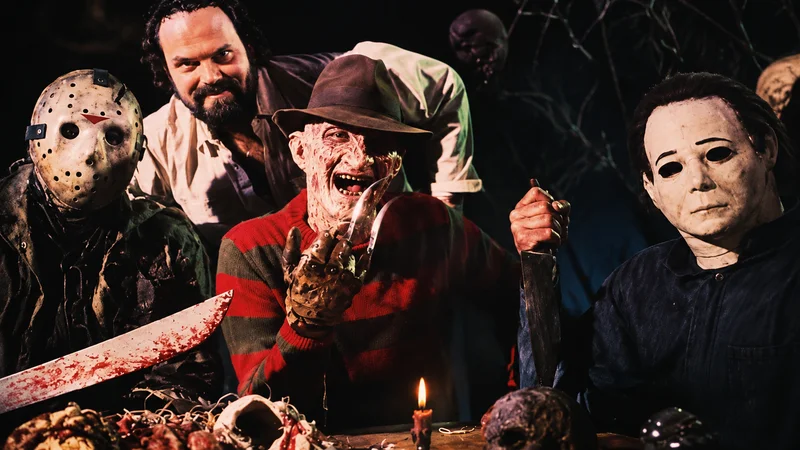
Body horror changes the question from “Who is attacking?” to “What is happening to me?” The strongest films in this group make transformation emotionally significant, not simply visually upsetting.
7. The Thing (1982)
- Style: Antarctic science-fiction creature horror
- Tone: Paranoid, isolated, and deeply suspicious
- Best for: Practical effects with sustained suspense
John Carpenter traps researchers at an Antarctic station with an alien organism capable of imitating its victims. The scientists cannot reliably identify who remains human, making every relationship a possible threat. That uncertainty gives the film a suspense structure strong enough to work even between its notorious creature reveals.
Rob Bottin’s creature effects remain essential to its reputation, but what makes the imagery frightening is its unpredictability. Bodies lose any stable shape just as trust disappears among the survivors. The Thing is especially valuable for viewers who want extreme makeup work attached to a tightly constructed atmosphere rather than a succession of disconnected shocks.
8. The Fly (1986)
- Style: Tragic science-fiction transformation
- Tone: Intimate, melancholy, and increasingly grotesque
- Best for: Viewers who want emotional stakes with body horror
David Cronenberg follows scientist Seth Brundle after a teleportation experiment accidentally combines his biology with that of a housefly. What first seems like a scientific triumph becomes a frightening physical decline. His relationship with journalist Veronica Quaife ensures that the changes affect more than the person undergoing them.
The Fly stands apart because the horror grows from loss of identity, intimacy, and control. Its remarkable makeup designs are disturbing, but the film’s real power lies in watching a person change faster than a loved one can understand. Start here if you want a film whose tragic dimension remains just as memorable as its effects.
9. The Substance (2024)
- Style: Contemporary beauty-industry body horror
- Tone: Satirical, escalating, and confrontational
- Best for: Social commentary delivered through grotesque imagery
Coralie Fargeat’s film follows Elisabeth Sparkle, a performer who turns to a mysterious procedure promising a younger, seemingly improved version of herself. The arrangement comes with strict rules about sharing time between bodies. The possibility of starting over quickly becomes a brutal examination of beauty standards, self-worth, and exploitation.
Its most important distinction is how carefully the spectacle serves the satire. Each new physical consequence dramatizes the pressure to replace an aging self with a supposedly better product. The increasingly excessive presentation is intentional, not an accidental lapse into absurdity. The Substance is a particularly strong pick for viewers who want to discuss a horror film after the credits.
10. Society (1989)
- Style: Surreal social satire and body horror
- Tone: Unsettling, bizarre, and darkly comic
- Best for: Viewers who enjoy grotesque metaphors
Brian Yuzna’s cult film centers on Bill Whitney, a Beverly Hills teenager convinced that his wealthy family and social circle are hiding something monstrous. The film lets his suspicions grow within a world of polished manners and disturbing hints. It is as much about class anxiety and alienation as it is about biological strangeness.
Society saves much of its notoriety for a famously outrageous climax. The physical effects make social conformity appear frighteningly literal, transforming the language of elites and outsiders into a grotesque image. Compared with a conventional killer movie, the payoff is less about survival tactics and more about revealing what lies beneath respectable surfaces.
11. From Beyond (1986)
- Style: Lovecraft-inspired laboratory horror
- Tone: Hallucinatory, strange, and sensual
- Best for: Fans of monsters from impossible dimensions
In another Stuart Gordon adaptation, a device designed to stimulate human perception opens contact with a terrifying parallel dimension. Researchers and investigators are drawn into increasingly dangerous experiments involving altered senses and monstrous intrusions. Jeffrey Combs and Barbara Crampton help ground the improbable setup in recognizable human curiosity and fear.
Where Re-Animator turns scientific arrogance into dark comedy, From Beyond leans harder into the collapse of sensory boundaries. Its creature designs feel unpredictable because the threat comes from realities that normal bodies were never meant to encounter. This is an excellent alternative to ordinary slashers if you prefer strange textures and cosmic unease.
12. The Blob (1988)
- Style: Small-town creature-feature remake
- Tone: Fast-moving, nasty, and surprisingly unpredictable
- Best for: 1980s monster-effects fans
Chuck Russell updates the 1958 monster premise with a rapidly expanding organism that consumes people in a California town. Teenagers and authorities struggle to respond as the threat moves through public spaces and hidden passages. Unlike a villain with a recognizable human motive, the creature is an unstoppable process of destruction.
The Blob earns its gore reputation through impressive effects and an unusually ruthless approach to who may be endangered. Its creature has no personality to negotiate with, which makes the threat feel impersonal and difficult to contain. The remake combines brisk storytelling with startling transformation effects, making it one of the most entertaining monster films on this list.
13. The Void (2016)
- Style: Cosmic horror inside an isolated hospital
- Tone: Nightmarish, mysterious, and claustrophobic
- Best for: Practical monsters and cult mythology
Jeremy Gillespie and Steven Kostanski place a police officer, hospital patients, and medical staff inside a building surrounded by ominous robed figures. As the situation deteriorates, supernatural forces and strange transformations overwhelm the survivors. Its hospital setting creates a useful contrast between medicine’s promise to preserve bodies and the horrors unfolding inside.
The Void borrows affectionately from the practical-effects tradition of 1980s horror, emphasizing creatures that seem to occupy real physical space. It is more interested in building an uncanny atmosphere than providing tidy explanations for every mystery. For fans of The Thing and From Beyond, it offers a modern continuation of their tactile nightmares.
14. Raw (2016)
- Style: French coming-of-age body horror
- Tone: Intimate, uncomfortable, and psychologically sharp
- Best for: Viewers interested in appetite and identity
Julia Ducournau follows Justine, a young vegetarian beginning veterinary school, as a hazing experience sparks a disturbing shift in her appetites. The setting matters: she is surrounded by rituals of belonging, competitiveness, and professional training involving animal bodies. Her private transformation becomes tangled with questions about family and self-definition.
Raw uses graphic moments selectively, making anticipation and shame as important as what appears on screen. Its intensity comes from the disconnect between how Justine sees herself and what she discovers she wants. It belongs here not for constant bloodshed but for how precisely physical horror illuminates the upheaval of growing into an unfamiliar identity.
Readers interested in supernatural identity struggles without the same level of graphic imagery can also explore our The Underdog review. That short-drama fantasy is not a gore horror film, but its hidden-power premise offers a useful contrast to body horror’s more frightening transformations.
Supernatural Gore, Slashers, and Modern Shock Cinema
Several of the best gore horror movies of the last two decades combine contemporary production values with an older appetite for shocking, handcrafted effects. Their approaches differ sharply: some are energetic survival films, while others use violence to make the viewer feel completely unsafe.
15. Evil Dead (2013)
- Style: Demonic cabin survival horror
- Tone: Relentless, serious, and physically intense
- Best for: Fans who prefer terror over slapstick
Fede Alvarez revisits the Evil Dead setup through Mia, a young woman staying at a remote cabin with friends while attempting to overcome addiction. When an occult book unleashes a malevolent force, her already fragile situation becomes a struggle to distinguish personal crisis from possession. The film’s intimate group dynamics make disbelief and fear especially consequential.
Unlike Evil Dead II, this version largely removes the comic cushion. It uses painful, close-quarters horror to sustain the idea that the characters are trapped in a place turning against them. The resulting intensity appeals to those seeking serious demonic horror with practical-style spectacle, though its oppressive tone is hardly relaxed viewing.
16. Evil Dead Rise (2023)
- Style: Urban demonic possession
- Tone: Frantic, domestic, and claustrophobic
- Best for: Viewers who enjoy family-centered survival horror
Lee Cronin moves the series from a remote cabin into an apartment building, where Beth visits her sister Ellie and Ellie’s children. A sinister discovery brings supernatural danger into their home, transforming familiar rooms into threatening spaces. The shift in location gives the franchise’s possession formula a fresh emotional center.
What makes Evil Dead Rise distinctive is the tension between family affection and violent transformation. Ordinary household objects and tight corridors heighten the danger because there is nowhere comfortable to retreat. The film pairs aggressive genre imagery with an easily understood emotional objective: protect the people you love when their own bodies are no longer safe.
17. Terrifier 2 (2022)
- Style: Supernatural clown slasher
- Tone: Sadistic, extravagant, and darkly theatrical
- Best for: Experienced fans of extreme practical effects
Damien Leone brings Art the Clown back to Miles County, where the killer targets Sienna and her younger brother around Halloween. The sequel gives its survivors more narrative weight than the original film while expanding the series’ unsettling supernatural mythology. Art’s silent performance style makes his violence feel both theatrical and chillingly detached.
The enduring talking point is its unusually prolonged and graphic set pieces. Yet Sienna’s resistance provides a stronger counterweight to the villain than a collection of anonymous victims would. Terrifier 2 is a demanding choice and not a good introduction to horror, but it clearly represents a modern branch of effects-driven splatter cinema.
18. Terrifier 3 (2024)
- Style: Holiday-themed extreme slasher
- Tone: Cruel, festive, and confrontational
- Best for: Fans already comfortable with Terrifier 2
The third film finds Sienna and her brother trying to rebuild their lives after Art the Clown’s previous assault. The approach of Christmas provides a deliberately jarring setting for his return. Cheerful seasonal imagery clashes with the franchise’s relentless physical threat, turning familiar holiday decorations into instruments of unease.
Among the best gore horror movies for audiences seeking pure extremity, Terrifier 3 stands out for its unapologetic escalation. But its appeal is narrow: the purposefully nasty humor and brutality may alienate even experienced slasher fans. It makes the most sense after seeing the previous installment, particularly because Sienna’s trauma continues to matter.
19. When Evil Lurks (2023)
- Style: Argentine rural possession horror
- Tone: Fatalistic, startling, and deeply bleak
- Best for: Viewers who want dread with shocking violence
Demián Rugna tells the story of brothers Pedro and Jimmy, who encounter a malignant presence spreading through their rural community. Attempts to contain the danger instead intensify it, and the film establishes rules whose violation carries terrifying consequences. The regional setting and community reactions give the possession story a distinctive social texture.
This is not a conventional parade of monsters. Much of the suspense comes from waiting for ordinary people to make catastrophic decisions under pressure. When the violence arrives, it is shocking partly because the characters are familiar and vulnerable. Choose it if you want disturbing supernatural horror in which graphic imagery serves a sustained sense of inevitable disaster.
20. Hellraiser (1987)
- Style: Gothic supernatural body horror
- Tone: Sensual, ominous, and ritualistic
- Best for: Fans of dark mythology and practical creature designs
Clive Barker introduces a sinister puzzle box linked to the Cenobites, beings associated with experiences beyond ordinary human pain and pleasure. The disappearance and attempted restoration of Frank bring bodily horror into a domestic space already complicated by secrecy and desire. The premise treats the body as a site of temptation as well as danger.
Hellraiser is memorable for its unsettling cosmology, not simply the quantity of violent imagery. Its grotesque transformations feel inseparable from the characters’ dangerous wishes. The film can be slower and stranger than modern slashers, but the combination of gothic atmosphere, practical makeup, and moral ambiguity gives it remarkable staying power.
21. Bone Tomahawk (2015)
- Style: Western horror with a rescue mission
- Tone: Patient, grim, and suddenly brutal
- Best for: Viewers who prefer contrast over constant gore
S. Craig Zahler begins with a familiar Western structure: a sheriff and companions set out to rescue captives from a dangerous group beyond town. Much of the journey focuses on exhaustion, personalities, and the difficulty of crossing hostile terrain. The measured pacing makes later horror feel like a violation of the film’s established rhythm.
Bone Tomahawk is not among the bloodiest movies minute for minute. It belongs because a small number of extraordinarily harsh sequences have a disproportionate impact. That difference matters when choosing a film: viewers seeking continuous spectacle may prefer Terrifier, while those interested in a slow journey toward an upsetting confrontation may find this more effective.
22. Saw III (2006)
- Style: Trap-based psychological horror
- Tone: Punishing, grim, and morally confrontational
- Best for: Fans of elaborate dilemmas and franchise mythology
The third Saw film brings a physician into Jigsaw’s latest series of connected tests while another participant confronts a sequence of terrible choices. Compared with the comparatively restrained first installment, Saw III increases the emphasis on graphic physical consequences. Its narrative still revolves around Jigsaw’s distorted claim that suffering can produce moral awakening.
The film’s unpleasantness is closely tied to that false moral logic. Rather than presenting physical danger as random, it turns injuries into part of an authoritarian system of punishment. That can make the experience more psychologically draining than a monster feature. Viewers unfamiliar with the franchise should start earlier to understand the continuing relationships and revelations.
These best gore horror movies use very different reasons for showing harm: demonic infection, a villain’s performance, personal trauma, or coercive moral games. Choosing by the source of the horror is often more useful than trying to compare blood volume across productions.
International Extreme Horror That Tests Viewer Limits
This section moves into films where graphic images are often inseparable from cruelty, despair, or transgression. They may be artistically significant, but several include prolonged suffering and are inappropriate choices for a casual group movie night.
23. Inside (2007)
- Style: French home-invasion horror
- Tone: Suffocating, vicious, and intimate
- Best for: Viewers seeking sustained claustrophobic tension
Alexandre Bustillo and Julien Maury follow Sarah, a pregnant widow whose Christmas Eve solitude is disrupted by a terrifying intruder. The domestic location makes the danger feel especially invasive: the place where Sarah should be able to retreat becomes the setting for a prolonged siege. Her vulnerability is integral to the emotional stakes.
Inside is difficult precisely because its violence is so personal. It offers little playful distance between the audience and the threatened character. The film is an important example of New French Extremity, but its pregnancy-related danger and relentless intensity demand a stronger content warning than the usual haunted-house or creature feature.
24. Martyrs (2008)
- Style: French extreme psychological horror
- Tone: Devastating, despairing, and philosophical
- Best for: Experienced viewers seeking difficult themes
Pascal Laugier begins with a woman whose childhood trauma shapes an obsessive search for answers and revenge. As the story expands, it moves beyond personal violence toward a disturbing inquiry into suffering and transcendence. The film’s reputation rests partly on how radically it changes expectations about what kind of horror story is unfolding.
Unlike exaggerated splatter comedies, Martyrs refuses the comfort of absurdity. Its graphic content is designed to weigh on the viewer, not provide a series of amusing effects demonstrations. It is worth considering for its uncompromising ambitions, but readers should know that the French original is especially distressing and is not interchangeable with its 2015 American remake.
25. High Tension (2003)
- Style: French countryside slasher thriller
- Tone: Urgent, anxious, and vicious
- Best for: Fans of stripped-down pursuit horror
Alexandre Aja’s film follows Marie and Alex on a visit to Alex’s family home, where their peaceful trip is shattered by a violent intruder. The isolated property and urgent attempts to survive keep the first part of the story tightly focused. Its brutal directness helped make the movie a recognizable part of early-2000s French horror.
High Tension is most attractive to viewers who want a chase thriller with immediate physical danger rather than elaborate mythology. The eventual narrative turn has divided critics, so its storytelling may be more contentious than its reputation for intense set pieces suggests. The recommendation here is for its sustained pressure and production style, not a promise that every twist satisfies.
26. The Sadness (2021)
- Style: Taiwanese outbreak horror
- Tone: Nihilistic, chaotic, and profoundly cruel
- Best for: Adults already familiar with extreme cinema
Rob Jabbaz imagines Taipei collapsing after an infection causes people to act on violent impulses. A separated couple attempts to reunite while ordinary city life becomes unpredictably dangerous. The broad premise resembles a zombie outbreak, but the infected retain a disturbing human awareness that changes the nature of the threat.
The Sadness is among the least forgiving selections here. Its disturbing content includes sexualized threat alongside severe violence, and those elements are central to its confrontational tone. For viewers seeking a story of tenderness surviving public collapse, the couple provides an emotional route through the chaos, but there is little relief from the surrounding cruelty.
27. Tokyo Gore Police (2008)
- Style: Japanese cyberpunk action horror
- Tone: Hyperstylized, satirical, and delirious
- Best for: Fans of surreal mutant effects
Yoshihiro Nishimura follows a policewoman battling bizarre, genetically altered criminals in a violent future Tokyo. The monsters transform their damaged bodies into increasingly strange biological weapons. The film’s feverish imagery reflects a world where public authority and private bodies have become equally distorted.
Unlike the grim realism pursued by some French titles, Tokyo Gore Police makes excess into an aesthetic language. Its blood effects and mutations are deliberately implausible, almost like grotesque comic-book art. The story may feel chaotic to viewers who prefer grounded characters, but its imaginative designs make it a distinctive international entry rather than another ordinary slasher.
28. The Beyond (1981)
- Style: Italian supernatural zombie nightmare
- Tone: Dreamlike, ominous, and surreal
- Best for: Fans of atmosphere and European cult horror
Lucio Fulci builds a nightmare around a Louisiana hotel situated over a gateway to Hell. Its protagonist confronts disturbances that resist ordinary logic, and the story unfolds as a sequence of increasingly ominous discoveries. Rather than moving toward a tidy explanation, the film embraces uncertainty and disorientation.
The Beyond deserves a place among the best gore horror movies because its graphic makeup effects sit inside an atmosphere of supernatural doom. The strangeness is part of its appeal: the imagery feels like fragments of a terrible dream rather than scenes from a procedural investigation. It is an excellent introduction to Fulci for viewers who value mood as much as explicit horror.
Zombie Horror Classics That Helped Define Graphic Effects
Zombie cinema connected gore with social commentary long before contemporary extreme slashers became widely discussed. These two George A. Romero films provide a useful foundation for understanding how practical effects can support larger ideas.
29. Day of the Dead (1985)
- Style: Post-apocalyptic bunker zombie horror
- Tone: Hostile, despairing, and suspenseful
- Best for: Romero fans and practical-makeup collectors
George A. Romero places a small group of scientists and soldiers beneath a world overrun by the undead. Their underground shelter becomes a pressure cooker as arguments over research and military authority undermine cooperation. The zombie Bub provides an unexpectedly memorable perspective on the possibility of change.
Day of the Dead is a major showcase for Tom Savini’s effects work, but the broader conflict matters just as much. The humans’ inability to collaborate gives the undead threat an almost tragic inevitability. Pick this film if you want elaborate practical gore and a bitter study of power, fear, and the breakdown of institutions.
30. Dawn of the Dead (1978)
- Style: Shopping-mall zombie survival horror
- Tone: Satirical, tense, and darkly entertaining
- Best for: Horror history and socially minded genre fans
Romero’s earlier zombie classic follows survivors who take refuge in a shopping mall as society collapses. The location gives them temporary access to shelter and consumer comforts, but it also raises questions about what people continue to value after ordinary life ends. The survivors are not merely protecting themselves from the undead; they are trying to build a replacement society.
Dawn of the Dead pairs Tom Savini’s graphic makeup work with a biting critique of consumer culture. Its deliberate pacing and social observations distinguish it from fast, action-heavy modern remakes. Watching it alongside Day of the Dead reveals how gore can operate as part of a larger political and human story, rather than as an end in itself.
Which Gore Horror Movies Should You Watch First?
For groups, the best gore horror movies often balance shocks with humor. Your ideal choice depends on whether graphic imagery feels entertaining, emotionally draining, or both. For a first foray into splatter, Braindead and Evil Dead II are playful introductions with very different comic rhythms. Re-Animator adds a stronger character-driven mad-scientist story, while Planet Terror is suited to a loud group watch.
If you prioritize storytelling over constant violence, start with The Thing, The Fly, The Substance, or Dawn of the Dead. Those films connect grotesque imagery to paranoia, grief, cultural pressure, or social breakdown. The Blob and The Void are good alternatives when your favorite part of horror is imaginative creature design.
For modern extremes, Evil Dead (2013) and Evil Dead Rise deliver intense possession horror, while Terrifier 2 and Terrifier 3 are more punishing demonstrations of prolonged slasher violence. Martyrs, Inside, and The Sadness carry especially heavy emotional and content warnings. They are better approached deliberately than used as surprise selections for unsuspecting friends.
A useful way to choose is to ask what you want the gore to do: make you laugh, make you marvel at makeup craftsmanship, or make you uncomfortable for a specific dramatic reason. That distinction will lead to a more rewarding watchlist than chasing a supposed record for the most blood shown on screen.
Frequently Asked Questions (FAQs)
What is the difference between gore horror and body horror?
Gore horror emphasizes explicit injury, blood, or physical destruction, whereas body horror focuses on disturbing changes to the body and the anxiety those changes create. The categories overlap frequently. The Fly and The Substance are major body-horror examples; Terrifier 2 is closer to an extreme slasher. The Thing successfully combines transformation, visceral effects, and suspense.
Which movies on this list are best for beginners?
Beginners who already tolerate graphic imagery may prefer the humorous approach of Evil Dead II, Re-Animator, or Braindead. Those films can still be extremely bloody, but their absurdity creates some emotional distance. The Fly and The Thing are stronger choices for viewers who want memorable stories alongside effects. None should be assumed suitable for children.
Which films are the most disturbing rather than simply bloody?
Martyrs, Inside, and The Sadness stand out for sustained cruelty and emotional severity, not merely technical effects. Bone Tomahawk contains fewer graphic moments but can have a powerful impact because of its otherwise measured pacing. Disturbance is subjective, however, and viewers can react very differently to torture, body transformation, animal harm, or danger involving children.
Do these movies use practical effects or computer-generated imagery?
Many classics rely heavily on prosthetics, puppetry, makeup, and staged physical effects, including Braindead, Re-Animator, The Thing, and Day of the Dead. Newer films may mix physical and digital techniques. A movie’s effectiveness does not depend on avoiding computers entirely; stronger results come from effects that fit the story’s visual language and emotional stakes.
Are all 30 films suitable for the same horror audience?
No. This list deliberately includes comic splatter, sci-fi body horror, supernatural stories, and extremely bleak thrillers. Someone who enjoys the cheerful absurdity of Planet Terror may dislike the cruelty in Martyrs. Check content advisories and age classifications for the specific edition available in your region, especially when choosing for a group with mixed comfort levels.
Final Thoughts
The enduring appeal of the best gore horror movies is variety. Graphic effects can make an audience laugh at impossible chaos, recoil from a frightening transformation, or consider the cruelty behind a fictional society. The most rewarding titles connect their visual imagination to something recognizable: fear of losing yourself, distrust of others, or the struggle to survive.
Start with a film whose tone matches your interests rather than automatically picking the most notorious title. Braindead offers exuberant splatter, The Thing demonstrates suspense-driven creature design, The Substance makes excess part of a contemporary satire, and Dawn of the Dead remains a landmark of politically aware zombie horror. The best gore horror movies are the ones whose ideas stay with you long after the initial shock wears off.