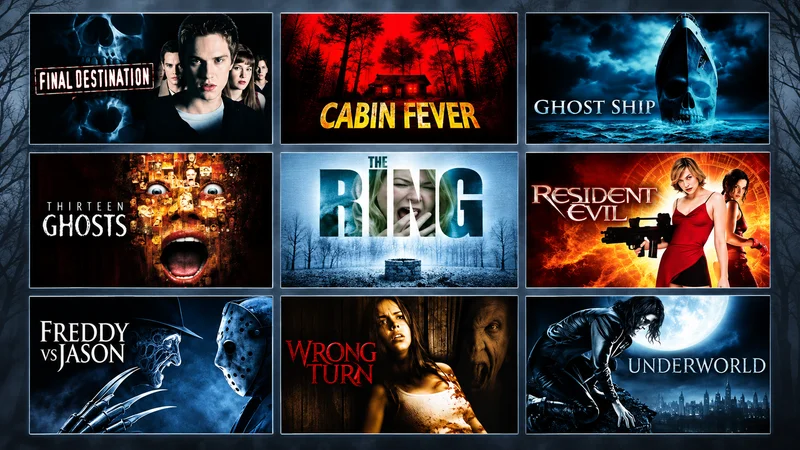
The best 2000s horror movies capture a decade when horror went global, digital cameras transformed suspense, and filmmakers found fresh ways to make familiar nightmares feel personal. A cursed videotape could start an investigation, a family reunion could conceal a ghostly secret, and an isolated journey could become a struggle for survival. This Top 35 focuses strictly on films associated with 2000 through 2009, from widely recognized hits to unsettling international discoveries.
For readers looking for movie recommendations at NetShort, this guide ranges from supernatural mysteries and found footage to extreme survival thrillers, vampire stories, and darkly comic monster movies. It also distinguishes the Japanese originals from their Hollywood remakes and marks especially disturbing films, so you can find an experience that matches your comfort level.
The best 2000s horror movies below are grouped by their main appeal, not sorted by an invented fear score. Every entry contains quick viewing cues and an individual explanation of its premise and significance, without revealing major endings. If a film debuted at a festival before its wider release, the date is clarified where necessary. Availability and age classifications can differ by region.
Why Did Horror Change So Much in the 2000s?
- Subgenres: Haunted-house mysteries, Japanese and Korean horror, zombie outbreaks, home-invasion thrillers, supernatural curses, and horror comedy.
- Filmmaking: Digital video, documentary-style cameras, intimate independent productions, and ambitious practical or visual effects.
- Themes: Grief, distrust, surveillance, social pressure, bodily vulnerability, and fear of unfamiliar spaces.
- Viewing intensity: Some films rely on suggestion and atmosphere, while others feature exceptionally graphic violence.
- Selection approach: Distinctive stories, enduring influence, diverse national cinemas, and a clear reason for modern audiences to watch.
The best 2000s horror movies are not limited to a single Hollywood cycle. The decade included the mainstream success of Asian horror remakes, a renewed fascination with outbreaks, and a surge of films that made home recordings seem like evidence of real danger. The following numbering is an editorial watchlist rather than a claim that fear can be measured objectively. All 35 selections are feature films, with genre hybrids noted honestly.
Mainstream Nightmares That Defined the Decade
The best 2000s horror movies turned recognizable locations into frightening situations. Some rely on atmospheric mystery, others on action or supernatural rules, but every entry offers a strong starting point for understanding the decade.
1. The Others (2001)
- Style: Gothic haunted-house mystery
- Mood: Restrained, elegant, and tense
- Best for: Viewers who prefer atmosphere over gore
Alejandro Amenábar sets his story on an isolated estate after World War II, where Grace cares for two children who cannot tolerate strong light. When servants arrive and unexplained noises begin, she becomes convinced that something is intruding into the family home. Nicole Kidman gives Grace a fierce determination that makes her protective routines both sympathetic and unsettling.
The Others uses closed curtains, long corridors, and uncertain sounds to create suspense without relying on graphic imagery. Its period setting makes the house feel removed from ordinary time, while the central mystery asks viewers to reconsider what they think they know.
2. The Ring (2002)
- Style: American supernatural mystery
- Mood: Cold, ominous, and investigative
- Best for: Fans of urban legends and cursed media
Gore Verbinski follows journalist Rachel Keller as she investigates a videotape said to bring death seven days after someone watches it. Her efforts to discover the recording’s origin lead through family history, disturbing imagery, and a series of increasingly personal risks. Naomi Watts anchors the investigation with practical urgency rather than helpless panic.
This is the American adaptation of the Japanese film Ringu (1998), which falls outside the decade covered here. The remake gives the curse a distinctive blue-gray visual world, turning a television screen into an everyday source of danger.
3. 28 Days Later (2002)
- Style: British infection survival thriller
- Mood: Frenetic, bleak, and politically anxious
- Best for: Viewers who enjoy post-apocalyptic tension
Danny Boyle introduces Jim, a bicycle courier who wakes from a coma to discover that a rage infection has devastated Britain. Moving through deserted streets and dangerous shelters, he meets survivors whose immediate needs do not always align. Cillian Murphy and Naomie Harris bring human vulnerability to a world where the infected are only part of the threat.
Its rough digital photography makes empty London feel startlingly immediate. The film uses short bursts of panic alongside quieter scenes about companionship and trust. Although often grouped with zombie movies, its infected people are living humans suffering from a fictional contagion, an important distinction in its approach to horror.
4. The Descent (2005)
- Style: Cave survival and creature horror
- Mood: Claustrophobic, merciless, and physical
- Best for: Fans of relentless enclosed-space suspense
Neil Marshall sends six women into a remote cave system while one member of the group is still coping with a devastating loss. An expedition intended to rebuild connections becomes a fight for survival when their route collapses and the darkness conceals further danger. The characters’ complicated friendships create as much pressure as the environment.
The Descent delivers tension through restricted light, difficult terrain, and the uncertainty of what lies beyond the next opening. When the physical threat becomes clear, the intensity escalates sharply. Different international versions are associated with different endings, so viewers comparing reactions should check which cut they have watched.
5. The Mist (2007)
- Style: Stephen King creature siege
- Mood: Bleak, combative, and suspenseful
- Best for: Viewers interested in group behavior under stress
Frank Darabont traps a group of residents inside a supermarket after a strange mist covers their Maine town. The fog conceals dangerous creatures, but disagreements among the people indoors become an equally serious problem. Thomas Jane plays a father trying to protect his son while ordinary neighbors split into rival ideas about what survival requires.
The movie gains much of its power from watching fear change the way a crowd thinks. Its monsters provide tangible danger, while the human conflict raises difficult questions about authority, belief, and desperation. The ending is famously severe, so this is not the right choice for someone looking for reassuring resolution.
6. Drag Me to Hell (2009)
- Style: Supernatural curse and horror comedy
- Mood: Mean-spirited, frantic, and gleeful
- Best for: Fans of outrageous Sam Raimi scares
Sam Raimi follows Christine Brown, a bank employee whose decision to deny a distressed customer an extension has frightening supernatural consequences. As her professional ambitions collide with a curse, ordinary visits and family gatherings become opportunities for escalating humiliation. Alison Lohman gives Christine enough desperation to keep the absurdity emotionally grounded.
Raimi uses sudden movements, grotesque practical gags, and exaggerated sound to turn the curse into a relentless comic nightmare. The film is deliberately unsubtle, and some viewers may find its treatment of misfortune cruel.
7. Paranormal Activity (2007)
- Style: Minimalist domestic found footage
- Mood: Patient, quiet, and nerve-racking
- Best for: Viewers frightened by nighttime silence
Oren Peli follows Katie and Micah as they set up a camera to record unexplained activity in their home during the night. Each new recording appears to reveal something more disturbing, while disagreements about how to respond place strain on the couple. Much of the film consists of ordinary rooms that invite viewers to search for tiny movements.
The small production became a major commercial phenomenon, but its most effective technique remains uncomplicated: suspense builds because viewers anticipate a change before anything occurs. The film premiered at Screamfest in 2007 and reached a wider theatrical audience in 2009. That distinction explains the two years often associated with its release.
Found Footage, Haunted Recordings, and Slow-Burn Discoveries
Digital cameras helped the best 2000s horror movies change visual storytelling. These six films suggest that the image we are watching might be incomplete, manipulated, or concealing something we have not yet noticed.
8. [REC] (2007)
- Style: Spanish found-footage outbreak
- Mood: Breathless, claustrophobic, and relentless
- Best for: Fans of fast-moving handheld suspense
Jaume Balagueró and Paco Plaza follow television reporter Ángela and her cameraman during a routine night with firefighters in Barcelona. A call to an apartment building becomes disastrous when its residents begin behaving violently and authorities seal the exits. The camera remains close to the action because the characters believe documenting events might explain what is happening.
Its confined staircases and narrow rooms make every change in direction feel dangerous. Unlike many found-footage films built around speculation, [REC] becomes an increasingly immediate survival nightmare. It is the Spanish original and should not be mistaken for the later American remake Quarantine (2008).
9. Cloverfield (2008)
- Style: Urban monster attack through a handheld camera
- Mood: Chaotic, urgent, and spectacular
- Best for: Viewers who like disaster-scale horror
Matt Reeves begins with friends attending a farewell party in New York before a colossal creature strikes the city. One attendee continues filming as the group attempts to find a missing friend amid collapsing streets and mounting confusion. The audience sees only what the unsteady camera captures, giving an enormous disaster an intimate and often disorienting perspective.
Cloverfield uses the scale of a monster movie while refusing the comfortable panoramic views typical of that genre. Its characters know almost nothing about the attacker, so the journey becomes a series of difficult choices instead of a scientific investigation.
10. Lake Mungo (2008)
- Style: Australian documentary-style ghost mystery
- Mood: Mournful, understated, and uncanny
- Best for: Patient viewers interested in grief and hidden lives
Joel Anderson presents the death of teenager Alice Palmer through interviews, family photographs, and apparently recovered recordings. As Alice’s relatives search for explanations of unusual incidents, they uncover details about a private life they never fully understood. The film imitates a television documentary, making contradictory memories and small visual clues central to the experience.
There are fewer conventional scares than in most possession movies, but the sustained uncertainty creates lasting unease. Lake Mungo is also a moving story about what families cannot know about one another.
11. Noroi: The Curse (2005)
- Style: Japanese occult mockumentary
- Mood: Methodical, ominous, and layered
- Best for: Viewers who enjoy assembling clues
Kōji Shiraishi follows paranormal investigator Masafumi Kobayashi through interviews, television footage, and recordings of unsettling events. Incidents that initially appear disconnected begin pointing toward a broader supernatural explanation. The documentary presentation encourages viewers to compare evidence rather than wait for a conventional protagonist to receive a single clarifying revelation.
Noroi is unusual because the camera style suggests an assembled investigation instead of continuous panic. The slow accumulation of voices and disturbances gives its mythology a frightening breadth.
12. Session 9 (2001)
- Style: Abandoned-asylum psychological horror
- Mood: Quiet, grim, and disorienting
- Best for: Fans of atmosphere and troubled personalities
Brad Anderson centers an asbestos-removal crew working inside a deserted psychiatric hospital. Financial pressure, personal conflicts, and disturbing discoveries gradually undermine the workers’ trust in themselves and one another. The sprawling building becomes an oppressive environment where hallways, old equipment, and fragments of recorded history contribute to a mounting sense of unease.
The film makes unusually effective use of a real institutional setting, allowing atmosphere to do work that elaborate effects might otherwise handle. Its drama depends on the emotional instability of the team as much as on the possibility of an external presence.
13. The House of the Devil (2009)
- Style: Retro occult slow-burn
- Mood: Patient, suspicious, and period-styled
- Best for: Viewers who appreciate vintage horror technique
Ti West follows Samantha, a college student who takes a babysitting job at a remote house after learning that the assignment is not quite what she expected. Her urgent need for money keeps her there while small inconsistencies begin to feel threatening. An isolated location and an unusual employer provide a simple foundation for sustained anxiety.
The movie deliberately resembles a forgotten horror production from an earlier era, using long stretches of ordinary behavior to heighten anticipation. Its eventual supernatural intensity depends on the patience of the build-up.
Asian and European Horror That Crossed Borders
The 2000s made international horror newly visible to many audiences through imports, remakes, festivals, and home-video discovery. These eight choices prove that there was no single global formula for frightening cinema.
14. Ju-on: The Grudge (2002)
- Style: Japanese curse and haunted-house horror
- Mood: Fragmented, eerie, and unforgiving
- Best for: Viewers who enjoy unconventional ghost narratives
Takashi Shimizu builds a story around a house marked by a terrible tragedy and the people who enter its orbit. Rather than following a single linear investigation, the film moves between visitors and consequences of the same malevolent curse. Ordinary corners of domestic space become frightening because the audience cannot predict when the presence will appear.
Its unsettling sound design and fractured structure distinguish it from a conventional Western haunted-house mystery. The Japanese original is identified as a 2002 production by its rights holder, while Japanese theatrical listings give an early 2003 opening. It should not be confused with the 2004 American remake also directed by Shimizu.
15. A Tale of Two Sisters (2003)
- Style: South Korean psychological ghost story
- Mood: Elegant, mournful, and deceptive
- Best for: Viewers willing to question every perspective
Kim Jee-woon follows two sisters returning to their family home after a period of institutional care. Their relationship with their father and stepmother is tense, while disturbing experiences suggest that the house contains more than ordinary domestic conflict. Im Soo-jung and Moon Geun-young anchor a story in which grief, resentment, and perception overlap.
The film creates fear through carefully framed interiors and the feeling that important parts of the family story remain unspoken. Its shifts in understanding reward an attentive audience, but the narrative is deliberately demanding.
16. Shutter (2004)
- Style: Thai supernatural photography mystery
- Mood: Creeping, guilt-ridden, and visually inventive
- Best for: Fans of ghost stories built around photographs
Thai filmmakers Banjong Pisanthanakun and Parkpoom Wongpoom follow photographer Tun and his girlfriend Jane after a late-night road accident. Strange figures begin appearing in photographs, and Jane grows increasingly troubled by Tun’s unwillingness to discuss aspects of his past. What begins as a haunting gradually becomes an investigation into responsibility and secrets.
The film makes still images feel unstable, encouraging the viewer to inspect ordinary pictures for details that should not be there. Its use of guilt as a narrative engine gives the scares substance. Choose the Thai 2004 original rather than the separate 2008 English-language remake when exploring the era’s regional horror boom.
17. The Host (2006)
- Style: South Korean monster adventure and satire
- Mood: Frantic, funny, and emotionally urgent
- Best for: Viewers who like creature stories with a family core
Bong Joon-ho follows a struggling family after a strange creature emerges from Seoul’s Han River and abducts a young girl. Her father and relatives attempt a rescue while officials react with confusion and often misplaced priorities. Song Kang-ho gives the family’s chaotic efforts a mixture of desperation, stubbornness, and dark humor.
Although its monster scenes are spectacular, the film is equally interested in civic institutions and the dignity of ordinary people. The unstable tone, moving between frightening attacks and comic dysfunction, makes it distinctive. Its mix of fear and satire also connects it with the wider selection of best modern horror movies. This Korean film is different from the British video-call horror Host (2020), despite the nearly identical English titles.
18. The Orphanage (2007)
- Style: Spanish family ghost mystery
- Mood: Poignant, atmospheric, and suspenseful
- Best for: Viewers interested in childhood and bereavement
J. A. Bayona follows Laura as she returns to the former orphanage where she grew up and hopes to open a home for children. When her son disappears, troubling incidents suggest that the building’s past may be relevant to the present. Belén Rueda makes Laura’s determination and fear the center of a mystery with deeply personal stakes.
The Orphanage relies on a strong emotional relationship rather than expensive spectacle. Games, masks, and deserted rooms become uncanny through suggestion, while carefully arranged clues encourage viewers to investigate alongside the mother.
19. Let the Right One In (2008)
- Style: Swedish vampire coming-of-age drama
- Mood: Wintry, tender, and disturbing
- Best for: Fans of unusual friendship and atmospheric vampires
Tomas Alfredson introduces Oskar, a lonely and bullied boy living in a Swedish apartment complex, who develops a bond with his mysterious new neighbor Eli. As violent incidents disturb the area, Oskar begins recognizing that Eli is not an ordinary child. Their connection offers comfort while raising difficult questions about dependency and violence.
The snowy landscape and restrained performances make the supernatural elements feel intimate instead of theatrical. The film has violent moments, but the enduring appeal lies in its uneasy mixture of friendship, isolation, and moral uncertainty. It is the 2008 Swedish original, not the later American adaptation Let Me In (2010).
20. The Devil’s Backbone (2001)
- Style: Spanish-language historical ghost drama
- Mood: Melancholy, politically charged, and uncanny
- Best for: Viewers who like supernatural stories grounded in history
Guillermo del Toro sets the story in an orphanage during the Spanish Civil War, where young Carlos encounters a ghostly presence and gradually discovers the tensions dividing the adults around him. The building shelters vulnerable children while larger political forces threaten their future. Fernando Tielve leads an ensemble in which the supernatural mystery grows from a deeply human tragedy.
The ghost is not merely a frightening image; it embodies memory and a history of violence that has not been confronted. Del Toro balances melancholy with striking visual design, giving the story a sense of place and purpose.
21. Pan’s Labyrinth (2006)
- Style: Dark historical fantasy and horror
- Mood: Beautiful, brutal, and profoundly sad
- Best for: Adults comfortable with war violence and fairy-tale dread
Set in Spain in 1944, Guillermo del Toro’s film follows young Ofelia as she enters a mysterious fantasy world while living under the authority of her cruel stepfather, a military officer. Tasks presented by an enigmatic faun offer an apparent escape from the violence of the adult world. Ivana Baquero gives Ofelia a mix of curiosity and courage that connects the contrasting realities.
Its creatures are memorable, yet the most frightening moments often emerge from human brutality. The film sits between dark fantasy and horror rather than functioning as a conventional slasher.
For viewers exploring the best 2000s horror movies beyond Hollywood, this group offers distinct starting points. Shutter and Ju-on build supernatural rules around curses, while The Host and Pan’s Labyrinth connect genre storytelling to family and historical pressures. The variety is part of the decade’s significance.
Traps, Home Invasions, and Uncompromising Survival
The best 2000s horror movies also explored the fear of being trapped, watched, or harmed by other people. The next seven are particularly intense, and several contain extreme violence rather than merely spooky imagery.
22. Saw (2004)
- Style: Puzzle-box crime horror
- Mood: Tense, grim, and twist-driven
- Best for: Viewers who like moral puzzles and confined mysteries
James Wan introduces two men who wake chained inside an unfamiliar bathroom, unsure why they have been placed there or what the unseen organizer expects. A parallel investigation links their predicament to a killer who constructs elaborate tests for his victims. Cary Elwes and Leigh Whannell make the central situation feel increasingly desperate as time and information run out.
The first Saw is more dependent on a mystery structure than its later reputation for elaborate traps might suggest. The sparse setting and difficult choices make it a defining entry in 2000s horror.
23. Hostel (2005)
- Style: Travel nightmare and captivity horror
- Mood: Cruel, grimy, and confrontational
- Best for: Adults with a high tolerance for graphic violence
Eli Roth follows young backpackers seeking adventure in Europe who are tempted by the promise of an exciting destination. Their search leads them into a horrifying scheme built around exploitation and the commodification of human suffering. The early travel-party atmosphere makes the later shift in tone particularly brutal.
Hostel is strongly associated with the decade’s appetite for extreme horror, although its central theme is not simply the spectacle of injury. It also uses anxieties about travel, wealth, and vulnerability far from home. Some portrayals of places and people are sensationalized, so treat the film as exploitation fiction, not a realistic account of its setting.
24. The Strangers (2008)
- Style: Rural home-invasion thriller
- Mood: Minimalist, merciless, and tense
- Best for: Viewers unsettled by ordinary vulnerability
Bryan Bertino follows Kristen and James as they spend a difficult night at a secluded vacation home. A late visitor and strange disturbances signal that masked intruders are watching the property. Liv Tyler and Scott Speedman portray a couple whose private emotional strain gives way to the immediate task of surviving attacks they cannot explain.
The movie succeeds by refusing to give its antagonists elaborate mythologies or reassuring motivations. A knock at the door and an empty hallway become frightening through uncertainty alone. Its realism is heightened for effect, and the threat of violence is persistent, making it an intense choice even without elaborate supernatural imagery.
25. Eden Lake (2008)
- Style: British survival thriller
- Mood: Punishing, realistic, and pessimistic
- Best for: Adults prepared for deeply distressing conflict
James Watkins follows Jenny and Steve as they attempt a peaceful weekend at a remote lakeside location. A confrontation with a group of local teenagers escalates into a dangerous pursuit, with attempts to find help offering little certainty. Kelly Reilly and Michael Fassbender provide a believable couple caught in increasingly frightening circumstances.
The discomfort comes from how quickly an ordinary dispute turns irreversible and from the characters’ inability to find a stable authority they can trust. The film is extremely bleak and involves sustained cruelty.
26. Martyrs (2008)
- Style: French extreme psychological horror
- Mood: Devastating, graphic, and philosophically bleak
- Best for: Only experienced viewers comfortable with prolonged cruelty
Pascal Laugier follows Lucie and Anna, whose relationship is shaped by a terrible childhood experience. As Lucie searches for the people responsible, a disturbing broader pattern begins to emerge. Mylène Jampanoï and Morjana Alaoui anchor a story in which trauma and the desire for answers become inseparable from very severe physical suffering.
Martyrs is discussed for its difficult questions about pain and belief, but these ideas do not diminish the intensity of its violence. It is not a casual recommendation, and viewers should consult detailed content guidance before watching. The entry refers to the 2008 French original, not its later English-language remake.
27. Inside (2007)
- Style: French home-invasion horror
- Mood: Claustrophobic, brutal, and relentless
- Best for: Experienced extreme-horror audiences
Julien Maury and Alexandre Bustillo center a pregnant woman named Sarah, who is alone at home following a personal tragedy. A mysterious intruder arrives with intentions that quickly become frighteningly clear. The film restricts much of its action to the house, turning ordinary rooms into increasingly desperate locations as Sarah tries to protect herself.
Inside is one of the harshest films in this guide and contains graphic violence involving pregnancy. Its compressed timeline and limited location create strong narrative urgency, but the material can be deeply upsetting. The film is included for its influence within French extreme horror, not because more graphic imagery automatically makes a better story.
28. 30 Days of Night (2007)
- Style: Arctic vampire siege
- Mood: Bleak, violent, and action-oriented
- Best for: Fans of relentless monsters and isolation
David Slade sets his vampire story in Barrow, Alaska, where the town’s long period without sunlight creates an opportunity for predatory visitors. Sheriff Eben Oleson and other residents struggle to protect survivors when outside help is difficult to reach. Josh Hartnett and Melissa George lead the human resistance across an increasingly dangerous town.
The premise gives the vampires a clear environmental advantage, making daylight itself a precious resource. The creatures are savage rather than romantic, and the snowbound setting makes escape appear nearly impossible.
Dark Humor, Teen Nightmares, and Cult Horror Favorites
The best 2000s horror movies were not always solemn. These seven films used satire, comedy, teenage insecurity, and memorable supernatural rules to give familiar scares unexpected personality.
29. Shaun of the Dead (2004)
- Style: British zombie horror comedy
- Mood: Witty, affectionate, and cheerfully bloody
- Best for: Friends who enjoy genre parody with heart
Edgar Wright follows Shaun, a London electronics-store worker whose ordinary routine collapses as a zombie outbreak spreads across the city. With his best friend Ed, he devises a plan to rescue loved ones and retreat to a familiar pub. Simon Pegg and Nick Frost make an appealing pair whose comic shortcomings become increasingly consequential.
The film works because it understands the rhythms of zombie horror while finding humor in recognizable relationships, workplace frustrations, and social habits. Its jokes reward repeat viewing, but its emotional losses remain real.
30. Slither (2006)
- Style: Alien parasite and creature horror comedy
- Mood: Slimy, outrageous, and oddly warm
- Best for: Fans of practical monsters and B-movie affection
James Gunn brings a parasitic extraterrestrial organism to a small American town, where its influence spreads through residents and transforms familiar relationships into a grotesque disaster. Local sheriff Bill Pardy and a determined woman named Starla become important figures in the effort to understand and contain the threat. Nathan Fillion and Elizabeth Banks give the chaos a human foundation.
Slither draws heavily on older creature-feature traditions while using modern comic timing and conspicuously messy effects. The film is comfortable being disgusting and silly in the same scene.
31. Trick ‘r Treat (2007)
- Style: Interconnected Halloween anthology
- Mood: Mischievous, eerie, and wickedly playful
- Best for: Viewers who like seasonal horror rituals
Michael Dougherty interweaves several stories unfolding on Halloween night in a town where violating the holiday’s traditions can have frightening consequences. Costumes, decorations, and unexpected encounters connect characters whose actions affect one another in surprising ways. The small figure known as Sam helps give the collection a memorable identity.
The film finds pleasure in old-fashioned seasonal storytelling, moving between dark humor and short bursts of supernatural menace. Its first public screening occurred in 2007, but a delayed home-video release in 2009 helped it gain a wider cult following.
32. Jennifer’s Body (2009)
- Style: Teen supernatural horror comedy
- Mood: Sarcastic, stylish, and unexpectedly sad
- Best for: Viewers interested in friendship and genre satire
Karyn Kusama follows Needy and Jennifer, two high-school friends whose relationship changes dramatically after Jennifer experiences a terrifying event. As violent incidents spread, Needy becomes increasingly concerned about her friend’s transformation. Amanda Seyfried and Megan Fox anchor a story built around unequal friendship, social status, and fear of growing apart.
The film combines a deliberately sharp teenage voice with supernatural violence and commentary on how young women are judged. Its reputation has evolved as more viewers revisit its themes and tone.
33. Ginger Snaps (2000)
- Style: Canadian werewolf coming-of-age horror
- Mood: Bitterly funny, intimate, and increasingly grotesque
- Best for: Fans of sisterhood stories with body horror
John Fawcett introduces sisters Ginger and Brigitte, outsiders whose fascination with death separates them from their suburban peers. After Ginger is attacked by a mysterious animal, physical and behavioral changes begin disrupting their relationship. Katharine Isabelle and Emily Perkins make the growing distance between the sisters emotionally convincing.
Ginger Snaps uses werewolf mythology to examine adolescence, menstruation, jealousy, and the fear of bodily change. Its humor is mordant rather than comforting, and its practical transformations become increasingly unpleasant.
34. American Psycho (2000)
- Style: Satirical psychological slasher
- Mood: Icy, absurd, and deliberately disturbing
- Best for: Adults interested in consumerism and unreliable narration
Mary Harron adapts Bret Easton Ellis’s novel about Patrick Bateman, a wealthy New York investment professional whose polished appearance conceals a frightening private life. Christian Bale portrays a man obsessed with status, possessions, and the performance of success. The 1980s setting becomes a carefully arranged world of surfaces and social competition.
Its horror lies partly in the uncertainty around Bateman’s account of himself and partly in the coldness of the society surrounding him. The violence and sexual material are substantial, but the film’s satire is central, not incidental. Although set in the 1980s, its release in 2000 makes it part of this decade’s cinema rather than the 1980s horror cycle.
35. Final Destination (2000)
- Style: Teen supernatural death-curse thriller
- Mood: Nervy, inventive, and darkly playful
- Best for: Viewers who like elaborate cause-and-effect suspense
James Wong follows Alex, a teenager who experiences a terrifying premonition of an airplane disaster and convinces several others to leave the flight. When the catastrophe occurs as foreseen, the survivors begin suspecting that the danger they escaped has not ended. The film replaces a visible murderer with an invisible pattern of seemingly ordinary accidents.
Its enduring innovation is turning everyday objects and coincidences into suspense devices. Viewers are encouraged to scan each scene for small hazards, making harmless routines feel threatening.
How to Choose the Right 2000s Horror Movie for Your Night
Start with your preferred source of fear. If you want a mystery without much graphic violence, choose The Others or The Ring. For an immediate survival challenge, 28 Days Later, [REC], or The Descent offer far greater urgency. If long quiet stretches interest you, Lake Mungo and Session 9 reward attention to atmosphere instead of rapid shocks. The best 2000s horror movies include all of these approaches, so popularity alone is a poor guide to enjoyment.
International horror offers some of the decade’s most distinctive experiences. Ju-on: The Grudge and Shutter build haunting narratives around specific histories of harm, while A Tale of Two Sisters and The Orphanage connect supernatural uncertainty with family relationships. Let the Right One In and Pan’s Labyrinth introduce tenderness into frightening worlds without pretending that the surrounding danger is harmless. Subtitles are often worth the effort, and choosing an original over a remake can reveal a different artistic perspective.
For a group that likes comedy with its fear, Shaun of the Dead and Trick ‘r Treat provide lively seasonal viewing, while Slither and Ginger Snaps are more physically grotesque. Experienced horror fans can consider Martyrs, Inside, or Hostel, but those films contain serious cruelty and graphic material. Stories about endangered children, trauma, pregnancy, or sexual violence can be more upsetting than a conventional monster attack, so take content advisories seriously.
There is also a useful double-feature approach. Compare the 2002 The Ring with the Japanese Ju-on to see two traditions of ghost horror, or match Cloverfield with [REC] to examine how different locations shape handheld-camera suspense. The Ring can also be paired with the 1998 Ringu outside this decade to examine adaptation. If you want the simplest introduction, start with The Others, Shaun of the Dead, or The Descent according to your tolerance for disturbing imagery.
Frequently Asked Questions
What years count as the 2000s for horror movies?
For this list, the 2000s means the calendar years 2000 through 2009. A film set in the 1980s, such as American Psycho, still qualifies because it was released in 2000. Festival premieres and later theatrical distribution may have different dates, so the guide identifies important exceptions while keeping its selections within the decade.
What are the best 2000s horror films for beginners?
The Others is a strong option if you prefer atmosphere and mystery, while The Ring offers a recognizable supernatural investigation. Shaun of the Dead adds comedy and zombie action, and The Descent is a much more intense survival choice. None of these films is automatically appropriate for children, so check regional ratings and personal comfort first.
Which 2000s horror movies are the most disturbing?
Martyrs, Inside, Hostel, and Eden Lake contain especially severe violence or distressing situations. The Mist and The Descent can also be emotionally punishing, though their styles are different. Intensity is subjective: cruelty, captivity, endangered children, and bodily harm may affect viewers more strongly than supernatural imagery. Detailed content advisories are valuable before choosing an extreme film.
Why do Paranormal Activity and Trick ‘r Treat have different release years?
Paranormal Activity first screened publicly at Screamfest in 2007, then reached a much larger audience through its 2009 theatrical release. Trick ‘r Treat also had early public screenings in 2007 before a wider home-video release in 2009. Different databases emphasize premiere, distribution, or home-release milestones, so the title and director help identify each film accurately.
Which international horror films from the decade are worth watching?
A Tale of Two Sisters and The Host are important South Korean choices, while Ju-on: The Grudge comes from Japan and Shutter from Thailand. Spain contributes [REC], The Orphanage, and Pan’s Labyrinth, and Sweden offers Let the Right One In. Each has a distinct style, so start with the subgenre you already enjoy and explore outward.
Final Thoughts
The best 2000s horror movies changed the genre through both technology and storytelling. The Ring made everyday media suspicious, The Descent turned the physical environment into a relentless trap, and The Host used a creature to expose social and institutional failure. Meanwhile, films such as Lake Mungo and A Tale of Two Sisters proved that a quiet mystery could leave an enduring emotional chill.
Begin with The Others for elegant suspense, 28 Days Later for outbreak panic, or Shaun of the Dead for humor with genuine horror. Then branch into international discoveries or harsher survival stories as your interests develop. This decade is worth exploring not because every film frightens in the same way, but because its filmmakers found so many different reasons to be afraid.