
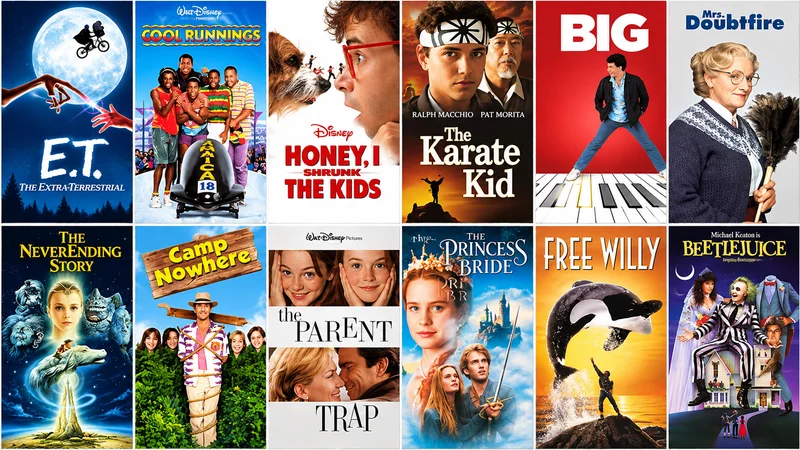
The best classic family movies have a way of bringing different generations into the same story. A child might remember the songs, creatures, or impossible adventures, while an adult notices the complicated parents, friendship, or growing pains underneath. This Top 35 covers enduring films released between 1939 and 1999, including hand-drawn animation, Hollywood musicals, imaginative adventures, and warmhearted stories from Japan.
For readers browsing recommendations at NetShort, a family classic does not necessarily mean a film suitable for every age. Some beloved titles feature frightening villains, parental death, bullies, dangerous stunts, or mature jokes. This guide points out those differences while focusing on what makes each movie memorable, from the kindness of My Neighbor Totoro to the unruly energy of The Goonies.
Explore the best classic family movies by mood rather than by an arbitrary ranking. Every recommendation provides three quick viewing cues followed by its premise and a specific reason to watch, without revealing major endings. Original theatrical release years identify the versions discussed. Parents and caregivers should consult current ratings and content guidance before choosing for younger children.
What Makes a Family Movie a Lasting Classic?
- Shared appeal: Memorable characters and stories that offer adults and children different points of connection.
- Range: Animation, musicals, coming-of-age comedy, science fiction, sports, animal adventures, and fantasy.
- Storytelling: Meaningful choices about courage, belonging, responsibility, friendship, and family change.
- Craft: Distinctive animation, practical effects, music, puppetry, and performances that remain engaging.
- Content awareness: Classic status is not a substitute for checking frightening scenes, dated stereotypes, or mature humor.
The best classic family movies last because their themes survive changes in animation technology and fashion. This watchlist considers cultural longevity, storytelling quality, and variety, not just box-office success. It deliberately includes several live-action and international choices alongside familiar Disney films. The numbers help readers navigate the collection rather than assign an objective score.
Animated Fairy Tales That Started Generations of Movie Magic
From handmade drawings to memorable melodies, these seven animated stories helped shape what audiences expect from a family fairy tale. Their appeal ranges from gentle friendship to unusually dark cautionary adventures.
1. Pinocchio (1940)
- Style: Animated moral fantasy
- Mood: Whimsical but sometimes frightening
- Best for: Families ready to discuss honesty and temptation
Disney tells the story of a wooden puppet brought to life by the Blue Fairy, who hopes to become a real boy. Guided by Jiminy Cricket, Pinocchio faces distractions and dangerous strangers that challenge his promise to be truthful and responsible. Geppetto’s wish gives the magical adventure an emotional foundation: he wants a son, while Pinocchio must learn what caring for others actually requires.
The remarkably detailed animation makes ordinary objects and underwater scenes feel alive. Yet the threatening puppeteer, frightening transformation sequence, and danger at sea can be intense for younger viewers. Its songs and clear emotional stakes keep it engaging, while its darker moments invite families to discuss how mistakes can have consequences.
2. Bambi (1942)
- Style: Woodland coming-of-age animation
- Mood: Gentle, lyrical, and sad
- Best for: Nature-loving viewers prepared for loss
A young deer discovers the changing seasons alongside his friends Thumper and Flower, gradually learning how to live in a forest full of wonder and danger. The episodic structure favors small experiences over a constant adventure plot, allowing Bambi’s relationship with his mother and the natural world to define his earliest understanding of safety.
The animation of animals, weather, and forests remains beautiful, and the quiet storytelling gives children space to notice details. The film also includes a famous parental loss, a forest fire, and moments of peril. It is a moving introduction to empathy and change, but adults should be ready to talk about grief.
3. Cinderella (1950)
- Style: Animated musical fairy tale
- Mood: Romantic, hopeful, and playful
- Best for: Viewers who enjoy transformation and resilience
Disney’s Cinderella lives with a cruel stepmother and stepsisters who exploit her kindness and labor. When a royal ball is announced, animal friends and a Fairy Godmother help create an unexpected opportunity to leave her ordinary life behind. The story balances household comedy, memorable music, and the excitement of an evening that may change her future.
The film’s enduring visual images include a magical dress, a pumpkin carriage, and the famous glass slipper. Today, families can also discuss why Cinderella’s limited choices reflect the fairy-tale world and what kindness should look like when someone is treated unfairly. It is a gentle pick compared with more action-heavy classics.
4. Alice in Wonderland (1951)
- Style: Surreal animated literary fantasy
- Mood: Colorful, nonsensical, and occasionally eerie
- Best for: Families who like imaginative episodic stories
Curious Alice follows a White Rabbit and enters a strange world filled with talking animals, riddles, and characters whose rules change without warning. The Cheshire Cat, Mad Hatter, and Queen of Hearts repeatedly disrupt her attempts to make sense of Wonderland. Rather than following a standard quest, the film moves through a series of increasingly bizarre encounters.
Its appeal comes from inventive color, wordplay, memorable character designs, and the sheer variety of situations Alice must navigate. The Queen’s threats and surreal transformations may unsettle sensitive children, but the story also encourages curiosity about unfamiliar perspectives. It works particularly well for viewers who enjoy visual surprises more than strict plot logic.
5. The Jungle Book (1967)
- Style: Animated animal adventure musical
- Mood: Relaxed, funny, and suspenseful
- Best for: Fans of songs and unlikely friendships
Mowgli, a boy raised by wolves, is urged to leave the jungle because the tiger Shere Khan poses a danger. His journey brings him alongside the protective panther Bagheera, easygoing bear Baloo, and several memorable animals who offer competing ideas about where he belongs. The music gives the adventure a playful rhythm even when the stakes grow serious.
Baloo and Bagheera’s contrasting personalities make the central friendships memorable. The film’s hand-drawn jungle and energetic musical sequences still invite repeated viewing, although its adaptations of Indian settings and character types reflect older American storytelling conventions. Families can enjoy the music while discussing what the film gets right and wrong about belonging.
6. The Little Mermaid (1989)
- Style: Underwater musical fantasy
- Mood: Romantic, lively, and perilous
- Best for: Viewers who love music and determined heroines
Ariel is fascinated by life beyond the sea, but her father King Triton worries about the human world. Her curiosity leads her to make a dangerous bargain with the sea witch Ursula, hoping for a chance to explore a different life and meet Prince Eric. Flounder and Sebastian provide companionship as the bargain puts her future at risk.
The film’s expressive animation and memorable songs brought renewed energy to Disney’s animated musicals. Ariel’s desire for independence offers a useful conversation about impulsive choices and communicating with family. Ursula’s frightening transformations and the climactic confrontation may be intense for small children, despite the movie’s bright colors.
7. Beauty and the Beast (1991)
- Style: Animated romantic musical
- Mood: Elegant, funny, and occasionally frightening
- Best for: Families interested in empathy and judgment
Belle dreams of a world beyond her provincial town and becomes a prisoner in a mysterious castle after attempting to help her father. Its master is a prince transformed into a Beast, surrounded by enchanted household objects. As Belle learns about the castle’s inhabitants, she must make decisions about compassion, freedom, and a possible change in their relationships.
The film’s music, ballroom imagery, and lively supporting characters remain defining features of animated cinema. Families may also want to discuss the difference between kindness and excusing threatening behavior, since the Beast initially treats Belle poorly. Some peril and frightening scenes make it better for children comfortable with fantasy villains.
Golden-Age Musicals, Puppets, and Storybook Spectacle
Some of the best classic family movies rely on music, performance, and old-fashioned spectacle rather than animation alone. These seven live-action and puppet favorites make their stories feel larger than life.
8. The Wizard of Oz (1939)
- Style: Live-action musical fantasy
- Mood: Magical, colorful, and sometimes scary
- Best for: Families discovering Hollywood fantasy history
When a tornado carries Dorothy away from Kansas, she arrives in the extraordinary land of Oz and sets out to find a way home. Along the Yellow Brick Road, she befriends the Scarecrow, Tin Man, and Cowardly Lion, each pursuing something they believe is missing. Judy Garland provides a relatable center as the journey becomes an exploration of courage and friendship.
The transition from Kansas to Technicolor fantasy remains one of Hollywood’s unforgettable moments. Songs and character chemistry invite repeat viewing, while the Wicked Witch, flying monkeys, and threatening forest can frighten younger children. It is an ideal classic to watch together and discuss how the companions discover strengths they already possess.
9. Singin’ in the Rain (1952)
- Style: Hollywood musical comedy
- Mood: Joyful, clever, and energetic
- Best for: Families who enjoy dancing and movie history
Gene Kelly plays silent-film star Don Lockwood as Hollywood struggles with the arrival of talking pictures. Don and his colleagues must confront awkward performances, studio expectations, and the challenge of making a musical that audiences will enjoy. Debbie Reynolds and Donald O’Connor add warmth and comic energy as a new performer and Don’s inventive best friend.
The spectacular choreography is accessible even to people unfamiliar with old Hollywood. Its jokes about microphones, voices, and filmmaking explain a real historical change through lively comedy. Children who enjoy music may connect immediately, although younger viewers may need a little context about how movies once worked without recorded dialogue.
10. Mary Poppins (1964)
- Style: Live-action and animated musical fantasy
- Mood: Warm, mischievous, and heartfelt
- Best for: Viewers who want songs with family themes
A magical nanny arrives at the Banks household in London, where Jane and Michael long for more attention from their busy father. Mary Poppins introduces impossible adventures, memorable companions, and a different view of daily responsibilities. Julie Andrews and Dick Van Dyke give the songs and comic set pieces considerable charm without losing the family’s need for connection.
The film mixes animation and live action with a confidence that still feels imaginative. Its deeper subject is the need for a family to notice one another, not merely a nanny’s spectacular abilities. Some older representations and accents may prompt questions, but the story is a strong musical choice for multigenerational viewing.
11. The Sound of Music (1965)
- Style: Historical family musical
- Mood: Uplifting with serious later tension
- Best for: Families comfortable with a long musical and wartime themes
Maria, a young woman training to become a nun, takes a position caring for the seven children of widowed Captain von Trapp in Austria. She introduces music and play to a rigid household, changing its relationships and discovering new possibilities for herself. Julie Andrews and Christopher Plummer anchor an increasingly personal family story.
The songs and mountain settings make the movie an enduring musical favorite, but its later sections involve the rise of Nazi power and threats to the family. Its considerable length also requires patience. Families who enjoy discussing history alongside music can find it especially rewarding, provided younger children are prepared for the changes in tone.
12. Chitty Chitty Bang Bang (1968)
- Style: Musical invention fantasy
- Mood: Eccentric, playful, and sometimes ominous
- Best for: Fans of magical vehicles and whimsical adventure
Inventor Caractacus Potts restores an old racing car with help from his two children, who discover that the vehicle may have extraordinary abilities. Their adventures draw in Truly Scrumptious and take them toward the fantastical kingdom of Vulgaria. Dick Van Dyke leads a story filled with elaborate songs, absurd inventions, and theatrical villains.
The title car is a memorable piece of family-movie design, and the film’s elaborate production makes the world feel like a toy box. The Child Catcher, however, is genuinely frightening for many young viewers. Its whimsical length and episodic nature work best for families willing to embrace old-fashioned storytelling.
13. Willy Wonka & the Chocolate Factory (1971)
- Style: Fantastical musical moral fable
- Mood: Bright, strange, and slyly unsettling
- Best for: Children comfortable with unusual consequences
Charlie Bucket lives in poverty but wins a chance to visit the secretive factory of eccentric candy maker Willy Wonka. Inside, Charlie and several other children discover rooms filled with imaginative sweets, impossible inventions, and rules that seem designed to reveal their behavior. Gene Wilder makes Wonka charming and unpredictable, leaving guests unsure whether to trust him.
Its practical sets and unusual songs continue to delight viewers, but the boat journey, dangerous situations, and punitive treatment of children can feel frightening or harsh. The movie invites discussion about greed, humility, and adult authority without providing a perfectly comfortable moral world. This is the 1971 film, not the later 2005 adaptation.
14. The Muppet Movie (1979)
- Style: Puppet road-trip musical comedy
- Mood: Silly, affectionate, and self-aware
- Best for: Families seeking jokes for different generations
Kermit the Frog sets out for Hollywood, meeting Fozzie Bear, Miss Piggy, Gonzo, and other performers on the journey. Their ambitions attract friends but also the attention of a business figure who wants Kermit for his own purposes. The movie mixes musical numbers with jokes about show business, friendship, and the unlikely nature of the group.
Jim Henson’s puppets give every encounter a handcrafted personality, while the self-referential humor works especially well with adults. The film celebrates collaboration without insisting that the characters become conventional heroes. It remains one of the more relaxed family choices here, though some jokes will resonate differently depending on age.
Big-Screen Adventures for Curious Kids and Older Viewers
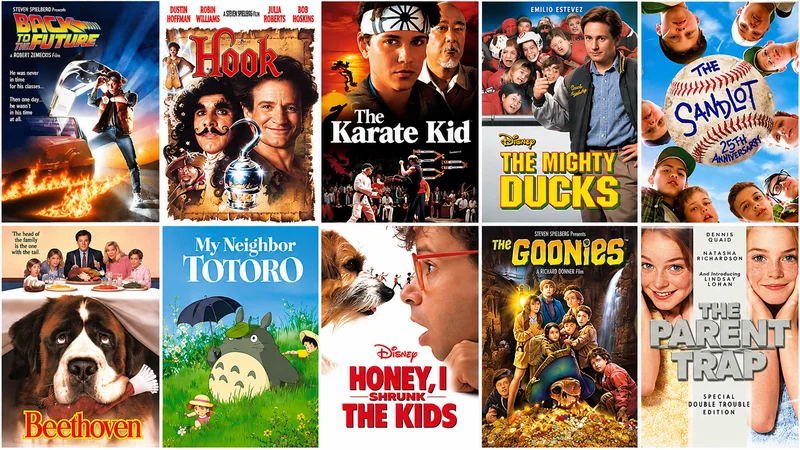
For families exploring the best classic family movies, energetic adventures can be especially rewarding. These seven put children and teenagers at the center of the action, although several have stronger language or frightening situations worth checking.
15. E.T. the Extra-Terrestrial (1982)
- Style: Science-fiction friendship fantasy
- Mood: Tender, exciting, and emotional
- Best for: Viewers ready for an alien-in-danger story
Steven Spielberg follows Elliott, a lonely boy who befriends an extraterrestrial stranded on Earth. With the help of his siblings, Elliott tries to hide the visitor and help it return home before government investigators can intervene. Henry Thomas makes Elliott’s attachment believable, turning a fantastic premise into a story about being understood by someone unexpected.
The suburban setting and bicycle imagery became famous, but the movie’s real accomplishment is making an alien relationship feel intimate. Several scenes of illness, fear, and separation can be upsetting for young children. It is an especially moving choice for families who can discuss what friendship means when two beings do not share a language.
16. The NeverEnding Story (1984)
- Style: Portal fantasy and quest
- Mood: Dreamlike, melancholy, and adventurous
- Best for: Fantasy fans comfortable with serious peril
Bastian discovers a mysterious book about a world called Fantasia, where a young warrior named Atreyu searches for a way to stop a destructive force known as the Nothing. As Bastian reads, the imaginary journey begins to challenge his understanding of the distance between a reader and a story. The film uses puppetry and creatures to give its fantasy landscape distinctive texture.
Its imagery remains imaginative, but the adventure includes frightening creatures, loss, and an especially emotional scene involving a horse. Those moments make it a better fit for children prepared for darker fantasy. The story also offers a powerful celebration of reading as a way to confront fear and helplessness.
17. The Goonies (1985)
- Style: Kids-on-a-treasure-hunt adventure
- Mood: Boisterous, mischievous, and tense
- Best for: Older children who enjoy friendship and danger
A group of neighborhood friends hopes to save their homes from redevelopment by following clues to a legendary pirate treasure. Mikey leads the search through hidden passages and underground obstacles, while criminals pursuing the same prize complicate their escape. The ensemble’s constant banter makes the children feel like an unruly real-life group rather than polished storybook heroes.
The practical sets, clever traps, and fierce loyalty have made the movie a favorite for family adventure nights. It also includes substantial language, threatening villains, and frightening moments, so it is not a default choice for very young viewers. Its greatest quality is the sense that ordinary friends can undertake something extraordinary together.
18. Back to the Future (1985)
- Style: Time-travel science-fiction comedy
- Mood: Fast, inventive, and funny
- Best for: Older kids and teens who like clever plots
Marty McFly is accidentally sent from the 1980s to 1955 in a time machine invented by eccentric scientist Doc Brown. To return home, he must deal with the unintended effect his arrival has on his parents’ teenage lives. Michael J. Fox and Christopher Lloyd turn a complicated premise into a lively relationship between a resourceful student and an unpredictable inventor.
The carefully connected details make repeat viewings rewarding, while the film explores how small actions can alter a family’s future. Some flirtation, bullying, violence, and suggestive jokes are more appropriate for older children. It works particularly well when parents and teens compare what school and family expectations looked like across generations.
19. The Princess Bride (1987)
- Style: Fairy-tale adventure comedy
- Mood: Romantic, witty, and swashbuckling
- Best for: Families with older kids who love quotable stories
Rob Reiner frames a storybook adventure around Westley’s efforts to reunite with Buttercup, who faces pressure to marry someone else. Along the way, swordsmen, giants, and unlikely allies turn the pursuit into a series of comic and dramatic encounters. Cary Elwes and Robin Wright lead a cast that treats fairy-tale language with both sincerity and humor.
The dialogue rewards adults while the adventure provides clear heroes and memorable action for young viewers. Sword fights, threatening characters, and some darker jokes make it less gentle than an illustrated bedtime story. Its distinctive balance of affectionate parody and genuine romance has kept it popular across generations.
20. Home Alone (1990)
- Style: Holiday home-defense comedy
- Mood: Slapstick, warm, and occasionally rough
- Best for: Families seeking mischievous holiday laughter
Eight-year-old Kevin McCallister is accidentally left behind when his large family travels for Christmas. Initially delighted by the freedom of an empty house, he soon faces the challenge of protecting his home from two burglars. Macaulay Culkin plays Kevin with a mixture of childish excitement and ingenuity, while the family separation creates an emotional throughline.
The elaborate traps and physical comedy remain highly memorable, but the injuries are exaggerated and could encourage imitation if taken literally. Younger viewers may also be upset by Kevin’s isolation or frightening neighbors. It is a lively Christmas family movie with more tenderness beneath its pratfalls than the premise suggests.
If Kevin’s Christmas adventure becomes a holiday tradition in your home, compare it with our best family christmas movies guide. That collection focuses specifically on seasonal stories, while this list covers family favorites across the full calendar.
21. The Sandlot (1993)
- Style: Childhood baseball coming-of-age
- Mood: Nostalgic, funny, and energetic
- Best for: Sports fans and families with school-age kids
Newcomer Scotty Smalls struggles to fit in after moving to a neighborhood in the early 1960s. A local group of boys welcomes him into their informal baseball games, where their summer adventures build friendships and misunderstandings. The kids’ fear of a mysterious dog beyond the fence gives an ordinary sports story a playful legendary dimension.
The Sandlot values belonging over winning trophies, making it appealing even to viewers who know little about baseball. Its nostalgia is tied to the idea of children making their own worlds during school breaks. Some language, teasing, and frightening dog imagery are worth considering for younger audiences.
Movie-night traditions do not have to center on superheroes or fairy tales. Home Alone shows how a holiday setting can make independence both exhilarating and lonely, while The Sandlot celebrates ordinary neighborhood friendships. Each is a different reminder that childhood adventures can feel enormous without leaving a recognizable world.
Gentle Stories About Friendship, Home, and Growing Up
A quieter side of the best classic family movies finds wonder without requiring a world-ending quest. These seven films celebrate daily responsibilities, animal friendships, changing households, and unexpected companionship.
22. My Neighbor Totoro (1988)
- Style: Japanese animated childhood fantasy
- Mood: Gentle, curious, and comforting
- Best for: Families wanting a quieter magical story
Hayao Miyazaki follows sisters Satsuki and Mei after they move to the countryside with their father while their mother recovers in a hospital. Exploring their new surroundings, the girls encounter mysterious forest spirits, including the enormous and gentle Totoro. Their relationship makes the magical discoveries feel like an extension of childhood imagination and a response to uncertainty at home.
The film is remarkable for allowing ordinary moments to breathe, from waiting at a bus stop to exploring plants and paths. There is no conventional villain, although worry about the children’s mother and a later disappearance may upset younger viewers. It offers a beautiful introduction to Japanese animation beyond familiar Western fairy tales.
23. Kiki’s Delivery Service (1989)
- Style: Japanese animated coming-of-age fantasy
- Mood: Warm, breezy, and gently reflective
- Best for: Children discovering independence and self-belief
Thirteen-year-old witch Kiki leaves home for a year of independent life, accompanied by her talking cat Jiji. In a seaside city she begins a small delivery business, makes friends, and encounters the loneliness that can accompany growing responsibility. Miyazaki treats Kiki’s magical ability as both a practical skill and a source of uncertainty about who she wants to become.
The story is less about defeating a villain than learning how to ask for help and recover confidence after setbacks. Its detailed city, friendly neighbors, and gentle humor offer pleasures for children and adults. Though there are some dangerous flying moments, it is generally more reassuring than an action-heavy fantasy adventure.
24. The Secret Garden (1993)
- Style: Period family drama and discovery
- Mood: Quiet, melancholy, and hopeful
- Best for: Viewers interested in nature and emotional change
Agnieszka Holland adapts Frances Hodgson Burnett’s novel about Mary Lennox, an orphan sent to live in her uncle’s gloomy English manor. She finds a locked garden and eventually becomes close to other children facing loneliness and illness. The neglected landscape gives Mary a physical project through which to rebuild relationships and develop empathy.
The film’s beautiful natural settings and restrained performances make its emotional transformation feel earned. Themes of death, neglect, and sickness can be heavy for very young viewers, while the slower pace rewards patience. It is an excellent family discussion movie about caring for spaces, people, and oneself.
25. Babe (1995)
- Style: Talking-animal farm fantasy
- Mood: Kind, funny, and emotionally sincere
- Best for: Animal lovers of several generations
A small piglet arrives at Farmer Hoggett’s property and begins finding his place among animals who hold strong assumptions about what different species can do. With support from Fly, a sheepdog, Babe learns about the farm and discovers an unexpected ability. James Cromwell provides a wonderfully understated human presence alongside the expressive animal characters.
Babe is a gentle but thoughtful story about rejecting limiting labels and treating others with respect. Some scenes involving animals in danger, farm life, and separation can be upsetting for sensitive children. Its combination of live animals, effects, and simple moral imagination makes it more than an ordinary cute-animal movie.
26. Fly Away Home (1996)
- Style: Wildlife and family adventure drama
- Mood: Tender, scenic, and uplifting
- Best for: Families interested in animals and environmental care
After a family tragedy, teenager Amy moves to Canada to live with her father and discovers orphaned goose eggs near a development site. She becomes attached to the birds and helps devise an ambitious plan to guide their migration. Anna Paquin and Jeff Daniels portray a father and daughter who struggle to communicate but find a shared purpose through their unexpected responsibility.
The flying sequences and countryside photography give the adventure real wonder without requiring fantasy magic. Grief, parental conflict, and concern for the geese add emotional stakes. Its message about stewardship and trust works well for family discussion, particularly with children curious about nature and conservation.
27. The Parent Trap (1998)
- Style: Separated-twins family comedy
- Mood: Breezy, playful, and sentimental
- Best for: Viewers who enjoy clever schemes and reconciliation
Two girls meet at summer camp and discover that they are identical twins who have been raised separately by their divorced parents. Hallie and Annie decide to exchange places in hopes of meeting the parent they never knew and possibly reuniting the adults. Lindsay Lohan plays both roles in a story built around contrasting personalities, practical jokes, and family longing.
The performances and summer-camp scenes make the mistaken-identity premise fun, while the separation provides a recognizable emotional challenge. It is a 1998 remake of the 1961 Disney film, not the original. Families may want to discuss the deception involved and the idea that children are responsible for repairing adult relationships.
28. The Iron Giant (1999)
- Style: Animated science-fiction friendship drama
- Mood: Tender, funny, and sometimes intense
- Best for: Families ready for questions about violence and choice
Brad Bird follows Hogarth Hughes, a boy in Cold War-era Maine who discovers a gigantic robot from space. As they become friends, Hogarth tries to protect the gentle visitor from a government agent who sees only danger. The Giant must learn what kind of being he wishes to become, while the humans around him respond very differently to the unfamiliar.
The film’s warm drawings and expressive robot make an unlikely friendship emotionally believable. Its frightening military conflict and themes of sacrifice are stronger than in most gentle animated stories. Children may find the action exciting, while adults can engage with its ideas about fear, prejudice, and responsibility.
Some of the best classic family movies find their magic in simple acts of care. From protecting geese to befriending an enormous robot, these stories give children agency while acknowledging that adults also need to grow. They make especially useful choices when families want an emotional discussion rather than constant action.
Beloved 1990s Family Favorites with Humor and Heart
The final seven films became touchstones for many families through memorable songs, inventive animation, mischievous children, and emotional stories about identity. Their original releases fall between 1992 and 1998.
29. Aladdin (1992)
- Style: Animated Arabian Nights-inspired musical fantasy
- Mood: Lively, funny, and romantic
- Best for: Fans of genie magic and comedic side characters
Street-smart Aladdin discovers a magical lamp containing a Genie who can grant wishes, offering a possible escape from poverty and a path toward Princess Jasmine. His plans become tangled with the ambitions of the royal adviser Jafar, whose hunger for power puts the kingdom at risk. Robin Williams’s energetic Genie brings rapid-fire comedy to the familiar fairy-tale structure.
The songs and expressive animation make the movie easy to revisit, while the story encourages discussion about honesty and pretending to be someone else. The film also contains older stereotypes in its depiction of an imagined Middle Eastern world, which adults may wish to address. This is Disney’s 1992 animated film.
30. The Lion King (1994)
- Style: Animated animal coming-of-age epic
- Mood: Funny, majestic, and emotionally intense
- Best for: Families ready for themes of loss and responsibility
Young lion Simba expects to inherit his father Mufasa’s place in the Pride Lands, but a family betrayal forces him away from everything he knows. New friends Timon and Pumbaa offer a different approach to life, while Simba struggles with guilt and the responsibilities he has avoided. The film combines an expansive animal setting with an intimate parent-child story.
Its music, animation, and voice performances make the drama vivid across generations. A central parental death, threatening villain, and animal confrontations can be distressing for younger viewers, however. Its lasting appeal lies in the way Simba’s growth requires facing the past rather than simply defeating an enemy.
31. Toy Story (1995)
- Style: Computer-animated buddy comedy
- Mood: Fast, inventive, and surprisingly moving
- Best for: Children who love toys and friendship stories
Andy’s favorite cowboy toy Woody is threatened by the arrival of Buzz Lightyear, an impressive new action figure who believes he is a real space hero. Their rivalry grows into an adventure that forces both toys to reconsider their assumptions and work together. Tom Hanks and Tim Allen give the contrasting personalities warmth and comic timing.
As the first feature-length computer-animated movie, Toy Story is a landmark, but its story remains engaging even when the technology is no longer a novelty. Scenes involving Sid’s intimidating toys and dangerous escapes may worry small children. Its central idea about friendship surviving jealousy makes the movie particularly easy to revisit as a family.
32. Matilda (1996)
- Style: Children’s fantasy comedy about unfair adults
- Mood: Mischievous, empowering, and occasionally dark
- Best for: School-age viewers who like resourceful young heroes
Danny DeVito adapts Roald Dahl’s story about Matilda Wormwood, a gifted girl whose parents dismiss her curiosity and whose school is ruled by the fearsome Miss Trunchbull. Supported by compassionate teacher Miss Honey, Matilda begins discovering abilities that help her challenge the adults who misuse their power. Mara Wilson makes the young heroine imaginative without losing her vulnerability.
The contrast between cruel authority and meaningful kindness gives the comedy emotional force. Exaggerated punishments and threatening adults may frighten younger children, even as Matilda’s cleverness provides reassurance. It is an engaging choice for families who want to talk about education, fairness, and having someone believe in you.
33. Jumanji (1995)
- Style: Board-game fantasy adventure
- Mood: Chaotic, suspenseful, and creature-filled
- Best for: Older children comfortable with sustained peril
When siblings Judy and Peter begin playing a mysterious board game, each turn releases a new danger into their home and town. The game also brings back Alan Parrish, who has been trapped inside it for years, and the group must finish playing to end the chaos. Robin Williams brings humor and emotional strain to a character confronting a childhood trauma.
The jungle animals, storms, and threatening hunter create a remarkably energetic adventure, but they also make it more intense than the premise of a family board game suggests. Children easily upset by pursuit and danger may need to wait. This is the 1995 original, not the later franchise reboot.
34. Mrs. Doubtfire (1993)
- Style: Live-action family and divorce comedy
- Mood: Funny, affectionate, and bittersweet
- Best for: Families with older children ready for complex emotions
After a painful divorce, actor Daniel Hillard wants to spend more time with his children. He invents a convincing elderly nanny persona named Mrs. Doubtfire and becomes employed in his former family home, creating constant complications for everyone involved. Robin Williams plays the disguise with comic exuberance, while Sally Field grounds the family’s more difficult emotions.
The movie uses humor to explore a child’s experience of changing family relationships, but Daniel’s deception raises important questions about boundaries and trust. Some jokes and romantic situations are intended for older audiences. It can prompt valuable conversation about how parents show love without assuming a family must return to its earlier shape.
35. Mulan (1998)
- Style: Animated musical action adventure
- Mood: Bold, funny, and occasionally intense
- Best for: Families who enjoy courage and identity stories
Mulan secretly takes her aging father’s place in the army when the Chinese emperor orders families to provide soldiers. Disguised as a man, she must learn military skills and navigate expectations while a dangerous invasion approaches. The character Mushu supplies comic energy, but the story makes her decision to protect her father the heart of the adventure.
Mulan balances humor and music with battlefield danger and themes of gender expectations. Its interpretation of Chinese culture is a Disney adaptation rather than a definitive account of a historical figure or traditional legend. Families can enjoy its determination and action while discussing the different pressures Mulan faces.
The best classic family movies from the 1990s show how broad the genre became. Toy Story explores jealousy through toys, Matilda challenges cruelty in childhood institutions, and Mulan connects identity to sacrifice and duty. The common thread is not one visual style but the importance of young characters making meaningful choices.
Which Classic Family Movies Suit Your Movie Night?
For younger viewers exploring the best classic family movies, start with My Neighbor Totoro, Kiki’s Delivery Service, Cinderella, or The Muppet Movie if gentle adventure and humor are the priority. Each offers memorable characters without relying on a constant stream of threatening villains. Still, even comforting films can involve illness, separation, or moments of tension, and individual children respond differently to those subjects.
For slightly older children, The Goonies, Back to the Future, The Princess Bride, and Jumanji provide more danger and fast-paced storytelling. The Goonies includes notable language, while Jumanji has sustained monster and animal peril. Willy Wonka & the Chocolate Factory and The NeverEnding Story are imaginative choices, but their strange images and sometimes harsh consequences may surprise families expecting gentle fairy tales.
If your family loves music, try The Wizard of Oz, Mary Poppins, The Sound of Music, or Singin’ in the Rain. These films are long-established classics for different reasons, from visual spectacle to choreography. The Sound of Music becomes serious during its historical conflict, while older musical films may require a short explanation of unfamiliar social conventions or filmmaking technology.
For conversation after the credits, Babe challenges stereotypes about what animals can do; The Iron Giant asks whether fear should determine how we treat strangers; Matilda explores unfair authority; and Mrs. Doubtfire addresses a family adjusting to divorce. Different stories inspire different discussions, and the best choice depends on the ages and interests around the screen.
Frequently Asked Questions
What counts as a classic family movie?
A classic family movie is a film that has remained meaningful or popular across generations and offers something viewers of different ages can appreciate. For this guide, the selections were originally released between 1939 and 1999. The label refers to lasting appeal, not guaranteed suitability for every child. Parents should still consider frightening scenes, language, and emotional themes.
Which classic family movies are best for younger children?
My Neighbor Totoro, Kiki’s Delivery Service, Cinderella, and The Muppet Movie are good places to begin for children who enjoy gentle storytelling. The Little Mermaid and The Jungle Book offer lively songs but also feature threatening villains. Every child’s sensitivities differ, so a family’s experience with suspense, separation, or loud action is more useful than assuming all older films are equally mild.
What are good classic family films for tweens and teenagers?
Back to the Future, The Goonies, The Princess Bride, and Jumanji can work well for older children who like adventure. Mrs. Doubtfire brings more realistic family conflict and adult humor, while The Iron Giant invites discussion about fear and responsibility. Some titles include strong language or sustained peril, so reviewing specific content guidance before watching is worthwhile.
Are classic animated movies always appropriate for all ages?
No. Pinocchio includes alarming transformations and dangerous strangers, Bambi deals with parental loss, and The Lion King features an intense family tragedy. Even colorful animation can contain fear, sadness, or stereotypes that need context. Consider your child’s maturity and what they have already enjoyed rather than using animation itself as a guarantee of gentle content.
Where should families start if they want classic movies from different countries?
The Wizard of Oz and Mary Poppins provide accessible American and British-associated studio traditions, while My Neighbor Totoro and Kiki’s Delivery Service offer Japanese animated storytelling centered on childhood. These four films contrast musical spectacle with quieter observation. Watching across countries and decades can help children recognize that family stories need not share the same rhythm, art style, or cultural assumptions.
Final Thoughts
The best classic family movies offer more than nostalgia. The Wizard of Oz celebrates companionship, Babe questions unfair expectations, My Neighbor Totoro makes ordinary childhood feel magical, and Toy Story gives familiar objects convincing emotional lives. Their lasting value comes from memorable storytelling and the conversations they open between people who may remember very different details.
Begin with a mood that fits your household: gentle imagination, energetic adventure, music, or a heartfelt family story. Then try something outside the films you already know, perhaps a Japanese animation, an older Hollywood musical, or a quieter drama. A shared favorite becomes a classic in a family not because everyone reacts the same way, but because the experience gives them something to remember together.