
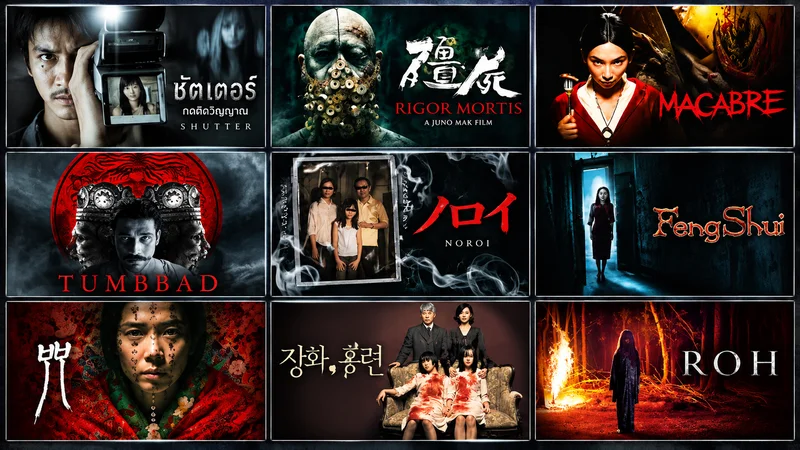
The best asian horror movies reveal how differently fear can be expressed across countries, periods, and traditions. Japanese filmmakers have transformed ordinary televisions and apartment buildings into nightmares, South Korean directors have linked hauntings to family secrets, and Southeast Asian storytellers have drawn from rural legends and supernatural obligations. This Top 35 spans influential classics and more recent discoveries, with films from Japan, South Korea, Thailand, Indonesia, Taiwan, Hong Kong, India, Malaysia, and the Philippines.
For viewers seeking frightening film recommendations at NetShort, this guide includes atmospheric ghost stories, ritual mysteries, zombie action, horror comedy, and graphic body horror. It gives each film a distinct reason to watch without claiming that one national tradition is scarier than another. Some titles involve child endangerment, sexual violence, suicide, or extreme physical harm, so content tolerance matters more than a simple scare ranking.
Use this list of the best asian horror movies to choose a starting point, discover a regional favorite, or plan a varied horror marathon. Each selection includes quick viewing cues and two spoiler-conscious paragraphs describing its premise and appeal. Release years identify the original Asian productions, not later Hollywood remakes; where a festival premiere and theatrical opening differ, the distinction is explained when useful.
What Makes Asian Horror So Distinctive?
- Japanese horror: Lingering uncertainty, cursed communications, suggestive ghosts, and psychological breakdowns.
- South Korean horror: Grief, family pressure, village rumors, social criticism, and frighteningly physical survival stories.
- Southeast Asian traditions: Regional folklore, ritual obligations, ancestral wrongs, and genre-bending ghost comedies.
- Chinese-language cinema: Urban legends, haunted vision, historical repression, and disturbing body-centered satire.
- Viewing intensity: From quiet black-and-white folktales to graphic possession and extreme violence, with no single regional formula.
The best asian horror movies do not share one set of rules. Country labels help explain production context, while the individual stories matter more than stereotypes about national culture. The selections favor distinctive direction, recognizable premises, strong atmosphere, and variety rather than a numerical fear score. Original-language titles and alternate release dates are noted when they prevent confusion.
Japanese Ghosts, Cursed Media, and Psychological Dread
Japan helped establish the international ghost-horror boom, but its cinema also includes unsettling detective stories and relationship nightmares. The seven films below range from the late 1990s through the found-footage era, with different approaches to unseen threats.
1. Ring (Ringu) (1998)
- Origin: Japan
- Style: Cursed-media mystery
- Best for: Viewers who enjoy investigative ghost stories
Hideo Nakata follows journalist Reiko Asakawa as she investigates a videotape linked to a series of mysterious deaths. After watching it herself, she receives an alarming warning and searches for the recording’s origin before time runs out. The tape’s disconnected images suggest a past tragedy, turning an ordinary home entertainment device into a supernatural threat.
Its minimal effects and eerie sound design changed the international vocabulary of ghost horror. The fear comes from waiting for something inevitable rather than seeing constant attacks. Choose the Japanese 1998 film, not the American remake The Ring from 2002, for this story’s original cinematic approach.
2. Cure (1997)
- Origin: Japan
- Style: Psychological crime horror
- Best for: Fans of unsettling detective stories
Kiyoshi Kurosawa follows detective Takabe as he investigates murders committed by seemingly unrelated people who cannot properly explain their actions. A mysterious man with an unreliable memory becomes central to the case, but his presence only increases uncertainty about responsibility and influence. The film gives familiar interview rooms and city streets an unnerving stillness.
Cure builds terror out of suggestion, repetition, and the fragility of individual will. It has less explicit supernatural spectacle than a typical possession story, making it an excellent choice for patient viewers who find human behavior more frightening than monsters. Its disturbing violence is brief but consequential.
3. Pulse (Kairo) (2001)
- Origin: Japan
- Style: Internet-age supernatural horror
- Best for: Viewers interested in technological isolation
In another Kiyoshi Kurosawa film, young people become entangled with ominous computer messages and disturbing encounters that suggest the boundary between the living and the dead is weakening. Separate characters search for explanations as people around them grow withdrawn or disappear. Empty apartments and unfamiliar digital interfaces become unsettling spaces in which connection offers little comfort.
Pulse is striking for treating technology as an expression of loneliness rather than simply an evil gadget. Long takes, vacant rooms, and slow-moving figures create a sense of dread that extends beyond a single ghost. It is the Japanese original, distinct from the 2006 American remake.
4. Ju-on: The Grudge (2002)
- Origin: Japan
- Style: Nonlinear haunted-house curse
- Best for: Fans of supernatural stories without easy rules
Takashi Shimizu builds a series of connected incidents around a house where violent events have left an enduring curse. People who enter its orbit experience increasingly frightening encounters, and the story follows several perspectives instead of one straightforward investigation. Familiar domestic spaces feel unsafe precisely because a threat can appear at an unexpected moment.
The film helped define the sound and appearance of early-2000s Japanese ghost horror. Its nonlinear structure encourages viewers to reconstruct how the incidents connect. Some records highlight its 2002 production and others its early-2003 Japanese theatrical opening; the title here identifies the Japanese film, not the 2004 American remake.
5. Dark Water (2002)
- Origin: Japan
- Style: Apartment haunting and maternal drama
- Best for: Viewers who prefer emotional ghost stories
Hideo Nakata follows Yoshimi, a mother struggling through a custody dispute while moving into a deteriorating apartment building with her young daughter. Water stains, leaks, and strange occurrences increasingly interfere with their attempt to create a stable home. The surroundings reflect her fear of failing to protect her child as the building’s past emerges.
Rather than overwhelming viewers with apparitions, Dark Water builds on repeated environmental details and parental anxiety. Its emotional center makes it especially effective for viewers who appreciate sorrow alongside supernatural mystery. The Japanese original differs from the later American adaptation released in 2005.
6. Noroi: The Curse (2005)
- Origin: Japan
- Style: Occult mockumentary
- Best for: Fans of evidence puzzles and slow reveals
Kōji Shiraishi presents a paranormal researcher following a series of apparently unrelated incidents through interviews, recordings, and television footage. Strange behavior and unsettling performances gradually point toward a larger supernatural pattern. The edited-documentary presentation makes the audience an investigator who must compare what witnesses claim with what the camera seems to reveal.
Noroi rewards concentration more than impatience: its disparate clues build toward an atmosphere of inescapable danger. The use of television material distinguishes it from a simple single-camera found-footage film. Viewers who enjoy piecing together mythology from fragments will find it particularly absorbing.
7. Audition (1999)
- Origin: Japan
- Style: Psychological relationship horror
- Best for: Experienced adults comfortable with disturbing violence
Takashi Miike follows widower Shigeharu as a friend arranges a fictional audition to help him meet a potential romantic partner. He becomes fascinated with the quiet Asami, whose personal history seems difficult to understand. What begins as an awkward drama about loneliness gradually turns into something far more disturbing, with revelations best left unspoiled.
The effectiveness of Audition lies in how patiently it establishes ordinary emotional expectations before challenging them. Its second half includes severe violence and upsetting imagery, making it unsuitable for viewers seeking a gentle mystery. The movie also invites discussion about objectification, deception, and control.
The best asian horror movies from Japan can be startlingly quiet. Ring makes an everyday recording threatening, Cure questions human agency, and Audition punishes expectations built by a seemingly ordinary romantic setup. Choose by pacing and tolerance for distress, not by reputation alone.
South Korean Nightmares from Family Secrets to Folk Rituals
The seven South Korean films in this group range from intimate family grief to public disasters, ritual mysteries, and disturbing supernatural investigations. They are not interchangeable: some move slowly and others depend on breathless action.
8. A Tale of Two Sisters (2003)
- Origin: South Korea
- Style: Psychological family ghost story
- Best for: Viewers who enjoy unreliable perspectives
Kim Jee-woon follows sisters Su-mi and Su-yeon after they return to their family home following a period of treatment. Their father remains distant, their stepmother seems hostile, and unexplained events disturb a house already burdened by family history. The sisters’ closeness becomes the emotional center as the audience tries to understand what happened before their return.
Intricate interiors and carefully controlled color make the household feel beautiful but oppressive. The movie links supernatural dread with family grief without providing all its answers immediately. It is best approached without detailed explanations of its twists, which form a major part of the experience.
9. The Wailing (2016)
- Origin: South Korea
- Style: Rural occult mystery
- Best for: Patient viewers who enjoy complex folklore
Na Hong-jin follows police officer Jong-gu as unexplained illnesses and violent incidents unsettle a remote village. Suspicion focuses on an outsider, but conflicting signs and rumors make it difficult to know whom to believe. When Jong-gu’s daughter becomes vulnerable, his investigation turns intensely personal, drawing him toward a shaman and increasingly desperate decisions.
The Wailing mixes police procedural detail with possession, ritual, and religious ambiguity. Its unusual length allows fear to grow from misinformation rather than relying on a constant stream of shocks. The film is disturbing and emotionally demanding, but its unanswered questions make it rewarding for viewers who enjoy discussing interpretations afterward.
10. Train to Busan (2016)
- Origin: South Korea
- Style: Zombie survival action
- Best for: Friends seeking action with human stakes
Yeon Sang-ho traps passengers on a train as a rapidly spreading infection throws South Korea into crisis. Seok-woo is traveling with his daughter when the danger reaches the carriages, forcing strangers to work together despite conflicting priorities. The narrow spaces and changing passenger alliances create urgent choices about who is protected and who is abandoned.
The film stands out for balancing swift zombie attacks with recognizable emotional relationships. Its social tensions are as important as the physical threat, making several moments surprisingly moving. It is more action-driven than a slow ghost mystery, an approachable gateway for viewers new to Korean horror.
11. The Host (2006)
- Origin: South Korea
- Style: Monster movie and family satire
- Best for: Fans of creature stories with social commentary
Bong Joon-ho follows a family after a monster emerges from the Han River and abducts a young girl. Her relatives attempt a rescue despite their limited resources, while official responses create additional obstacles. Song Kang-ho gives the father a mix of awkwardness and persistence, and the creature becomes the center of a distinctly human family crisis.
The Host can be horrifying and funny within the same sequence, using institutional confusion as part of the terror. It is not the British video-call film Host (2020). The Korean original offers an accessible alternative for readers who enjoy action, family dynamics, and a sharply observed society.
12. Thirst (2009)
- Origin: South Korea
- Style: Vampire drama and dark romance
- Best for: Adults interested in transgressive relationships
Park Chan-wook follows Catholic priest Sang-hyun after a medical experiment leaves him with an extraordinary condition that changes his appetites. His relationship with Tae-ju develops amid conflicting loyalties and increasingly troubling choices. Song Kang-ho and Kim Ok-vin play characters whose desires challenge the roles their social world expects them to fulfill.
Thirst treats vampirism as an uncomfortable extension of lust, guilt, and the temptation to abandon responsibility. Its romantic intensity comes with explicit sexual material and violence, making it an adult recommendation. The film differs from action-oriented vampire stories by focusing on moral instability.
13. Gonjiam: Haunted Asylum (2018)
- Origin: South Korea
- Style: Livestream found-footage horror
- Best for: Viewers who enjoy ghost-hunting setups
Jung Bum-shik follows a group creating an online horror broadcast inside a supposedly haunted asylum. Their plan depends on capturing frightening footage for an audience, but unexplained incidents begin undermining their control of the experience. Body-mounted cameras emphasize both reactions and surroundings, keeping the viewers uncomfortably close to each discovery.
Its abandoned location and social-media framing make an especially effective combination: the crew wants proof yet loses the ability to manage the story. Although inspired by a real location’s reputation, the frightening events are fictional. Choose it when you prefer immediate scares over lengthy mythology.
14. Exhuma (2024)
- Origin: South Korea
- Style: Burial ritual and occult mystery
- Best for: Fans of shamanism-centered investigative horror
Jang Jae-hyun follows two young shamans who are hired by a wealthy family troubled by inexplicable events. Working with a geomancer and an undertaker, they investigate an ancestral burial site and choose to exhume the remains. The procedure exposes a far more dangerous history than the team anticipated, intertwining professional expertise with supernatural consequences.
Exhuma offers an unusually specific investigation rooted in burial practices, landscape, and cultural memory. The ritual sequences are visually compelling, but the story works as a mystery even before its larger threat emerges. Its release year is 2024, and the narrative should not be reduced to a generic exorcism film.
Among the best asian horror movies from South Korea, Train to Busan offers direct survival thrills, while The Wailing and Exhuma are more ritualistic and demanding. A Tale of Two Sisters and Thirst are particularly emotional or morally uncomfortable; Gonjiam favors immediate scares.
Thai and Indonesian Horror with Regional Legends
Thailand and Indonesia offer rich, varied supernatural filmmaking, combining urban legends with family pressure and community histories. These seven selections move from photography-based ghosts to dark humor and extremely graphic black magic.
15. Shutter (2004)
- Origin: Thailand
- Style: Ghost photography mystery
- Best for: Viewers who love visual clues
Banjong Pisanthanakun and Parkpoom Wongpoom follow photographer Tun and his girlfriend Jane after they flee the scene of a nighttime accident. Strange shapes soon appear in Tun’s photographs, and Jane suspects the incidents are connected to something he will not explain. The photographs become pieces of evidence pointing toward a troubling personal history.
The film turns familiar images into threatening objects and makes guilt central to its haunting. Its most memorable scares depend on what the characters overlooked, not simply on a sudden apparition. The 2004 Thai film is distinct from the 2008 American remake.
Shutter belongs to the era when original Japanese, Thai, and Korean supernatural stories began traveling widely. For a complementary decade-based watchlist, readers can explore best 2000s horror movies, which also covers global found footage, survival thrillers, and supernatural mysteries outside Asia.
16. The Medium (2021)
- Origin: Thailand / South Korea
- Style: Folk possession mockumentary
- Best for: Experienced viewers interested in spiritual traditions
Banjong Pisanthanakun follows a documentary crew observing Nim, a spirit medium in northeastern Thailand, as worrying changes emerge within her extended family. The filmmakers initially record ceremonies and personal testimony, but their apparently detached project becomes increasingly difficult to control. Family secrets complicate the question of what kind of spirit might be involved.
This Thai-language film, produced in collaboration with South Korean filmmakers, allows its regional setting to shape the mystery. The documentary framing gradually shifts toward frightening possession scenes. Its representation of ritual is fictional storytelling rather than proof of supernatural beliefs, and its later violence is strong.
17. Ladda Land (2011)
- Origin: Thailand
- Style: Suburban haunted-estate drama
- Best for: Viewers who like family and housing anxieties
Sophon Sakdaphisit follows Thee, who buys a home in a residential development near Chiang Mai and moves his family there hoping for a fresh start. Trouble within the family collides with disturbing reports and supernatural events in the neighborhood. Financial pressure and strained relationships make leaving the property more difficult than simply admitting something is wrong.
Ladda Land gives the haunted-house formula a recognizable social context: the promise of homeownership can turn into a trap. Its family conflicts are sometimes more painful than the ghosts themselves. It is a suitable pick for viewers who prefer everyday anxieties to elaborate occult rules.
18. Pee Mak (2013)
- Origin: Thailand
- Style: Folklore-based romantic horror comedy
- Best for: Friends who want laughs with traditional ghosts
Banjong Pisanthanakun follows Mak returning from war with four companions to reunite with his wife Nak. Villagers whisper that something is wrong at the couple’s home, and Mak’s friends begin investigating a disturbing rumor. The film adapts the familiar Mae Nak ghost legend through friendship, slapstick suspicion, and romance.
Pee Mak proves that an Asian ghost film need not be relentlessly bleak. Its comedy depends on the friends’ frantic reactions, while the relationship gives the folklore emotional weight. Choose it as a lighter counterpoint to the violent and psychologically demanding entries elsewhere on this list.
19. Satan’s Slaves (2017)
- Origin: Indonesia
- Style: Family haunting and religious dread
- Best for: Viewers drawn to family-centered hauntings
Joko Anwar follows a struggling family after the illness and death of their mother, a former singer. Strange noises and apparitions unsettle the household, while discoveries about its history suggest that the children face more than ordinary bereavement. The isolated house and economic problems make their situation feel increasingly precarious.
The film revives an earlier Indonesian horror title while building its own memorable atmosphere through domestic sounds and shadows. Its depiction of grief gives the frightening incidents a strong emotional center. It is a useful introduction to Indonesia’s contemporary supernatural horror revival.
20. Impetigore (2019)
- Origin: Indonesia
- Style: Rural curse and folk mystery
- Best for: Fans of ancestral secrets and village legends
Joko Anwar follows Maya, who learns that her family may have ties to property in a remote village. She travels there with a friend hoping to improve her difficult circumstances, only to encounter suspicious locals and a deeply troubling history. The village’s apparent hostility gradually suggests that old grievances remain dangerously active.
Impetigore makes rural geography and inherited obligation part of the threat. Its mystery unfolds through human behavior as much as supernatural clues, and the violence can be brutal. Choose it if you prefer folk horror that connects a personal search with an entire community’s past.
21. The Queen of Black Magic (2019)
- Origin: Indonesia
- Style: Revenge and black-magic horror
- Best for: Adults comfortable with graphic practical effects
Kimo Stamboel follows families visiting the rural orphanage where their fathers grew up, hoping to pay respects to its ailing caretaker. The reunion turns into a nightmare when dark magic and violent events expose buried wrongs. The isolated building becomes an arena where former relationships and old abuse return in frightening forms.
This is a reimagining of an Indonesian film from 1981, not a direct continuation of it. The atmosphere is tied to guilt and institutional neglect, but the graphic body horror is much stronger than in many ghost stories. It is best for experienced audiences who accept extreme imagery.
The best asian horror movies from Southeast Asia do more than borrow the long-haired-ghost image. Shutter connects terror to guilt, Pee Mak uses folklore for romance and comedy, and Impetigore puts inherited obligation at the center of its mystery.
Hong Kong and Taiwanese Ghosts, Curses, and Social Fear
Taiwanese and Hong Kong filmmakers have explored ghosts through photography, historical repression, family obligations, and urban legends. These seven films also show how international coproductions complicate any rigid division by national borders.
22. The Eye (2002)
- Origin: Hong Kong / Singapore
- Style: Ghost vision and supernatural mystery
- Best for: Fans of haunted perception stories
Danny and Oxide Pang follow a young woman who receives a corneal transplant and begins seeing figures that others cannot perceive. Her attempt to understand the visions leads toward the history of the donor and disturbing events that ordinary sight cannot explain. Angelica Lee gives the lead a vulnerable but determined presence.
The Eye makes a gift of restored vision feel frightening because every unfamiliar image might carry a hidden meaning. Its emotional story complements several memorable apparitions. The 2002 Hong Kong and Singapore production is the original, not the 2008 Hollywood remake.
23. Rigor Mortis (2013)
- Origin: Hong Kong
- Style: Jiangshi-inspired supernatural horror
- Best for: Fans of Hong Kong vampire traditions
Juno Mak follows a struggling actor moving into a dilapidated public housing block, where his despair intersects with the building’s strange residents and supernatural history. Ghosts, ritual practices, and a reanimated body complicate his attempts to escape the past. The film deliberately echoes Hong Kong hopping-vampire cinema while adopting a darker visual style.
Rigor Mortis is an interesting bridge between older horror comedy and modern melancholy. It includes themes of suicide and grief that make it more serious than the films it references. Its atmospheric sets and elaborate effects are a major draw for viewers interested in Jiangshi mythology.
24. Dumplings (2004)
- Origin: Hong Kong
- Style: Grotesque body-horror satire
- Best for: Adults interested in beauty and aging critiques
Fruit Chan follows a wealthy woman seeking to regain her youth and her husband’s attention. She visits a mysterious cook whose specialty dumplings promise unusual benefits, but the secret behind the recipe is horrifying. The seemingly respectable domestic setting turns a familiar beauty obsession into a disturbing moral bargain.
The feature-length Dumplings is related to a segment of the anthology Three… Extremes, also released in 2004. The film contains reproductive and bodily material likely to upset many viewers. Its value lies in unsettling satire rather than in uncomplicated shock effects.
25. Incantation (2022)
- Origin: Taiwan
- Style: Ritual curse and found footage
- Best for: Viewers who like curses built around rules
Kevin Ko follows Li Ronan as she tries to protect her young daughter from a curse linked to a forbidden religious ritual years earlier. Fragmented recordings and direct appeals to the camera invite the audience to assemble what happened and why her family remains vulnerable. Personal guilt makes the supernatural danger feel urgent.
Incantation uses documentary-style imagery in an unusually interactive way, making viewers conscious of their own role as spectators. Its ritual imagery and family drama drive the suspense. The film is fictional and should not be interpreted as a record of real occult practices.
26. The Tag-Along (2015)
- Origin: Taiwan
- Style: Urban-legend forest haunting
- Best for: Viewers who enjoy ghosts in familiar places
Cheng Wei-hao builds suspense around a small figure in red rumored to follow people into forests and appear in troubling recordings. When a woman’s loved one disappears, the legend becomes part of a frightening personal search. The film connects modern relationships and city life to stories about an older, less easily explained landscape.
The Tag-Along gains much of its power from making a simple visual detail feel threatening. Its mystery depends on the tension between dismissing a rumor and treating it seriously. Choose the 2015 Taiwanese original rather than confusing it with its later sequels.
27. Detention (2019)
- Origin: Taiwan
- Style: Historical school supernatural horror
- Best for: Viewers who value historical context
John Hsu sets the story during Taiwan’s White Terror period, when students live under restrictions on speech and books. A girl finds herself wandering a transformed school where frightening imagery reflects the institution’s secrets and the broader climate of repression. What begins as a supernatural mystery is inseparable from memory, fear, and responsibility.
Detention adapts a video game but works as a standalone film about political persecution and personal guilt. Some international distribution listings use 2021, while its original Taiwanese release was in 2019. Its historical themes make it emotionally demanding beyond its ghostly scenes.
28. The Bridge Curse (2020)
- Origin: Taiwan
- Style: Campus folklore and ghost challenge
- Best for: Groups seeking modern supernatural scares
Lester Hsi follows university students who test a legend about a haunted campus bridge as part of a dare. What begins as a familiar challenge grows dangerous when the students realize that their assumptions about the story may be incomplete. The film uses a campus setting and competing accounts of events to build its mystery.
The Bridge Curse is a more immediate and accessible option than the complex historical tragedy of Detention. Its appeal lies in the simple setup, shifting clues, and frightening encounters around an ordinary landmark. It fits an evening when viewers want a modern ghost story rather than extreme gore.
These best asian horror movies show a different range of concerns. Detention links ghosts to historical repression, Dumplings uses horror to confront aging and beauty, while The Bridge Curse offers a more straightforward group scare built around a campus legend.
Folk Horror Classics and Discoveries Across Asia
The final seven films extend the timeline from Japanese folk cinema to newer Indian, Malaysian, and Filipino discoveries. Their different visual styles make a useful counterpoint to the more familiar wave of cursed-media films.
29. Onibaba (1964)
- Origin: Japan
- Style: Black-and-white period folk horror
- Best for: Fans of classic visual atmosphere
Kaneto Shindo follows an older woman and her daughter-in-law surviving in war-torn medieval Japan by attacking wandering samurai. A man’s return disrupts the household, and jealousy intensifies the atmosphere of desperation. Tall grasses, wind, and an ominous demon mask create a harsh visual world in which human desires become frightening.
Onibaba is not a conventional ghost adventure. Its terror grows from poverty, sexuality, and the consequences of betrayal, with folklore adding a nightmarish dimension. The film includes adult themes but offers an essential introduction to Japanese horror traditions before the videotape era.
30. Kwaidan (1965)
- Origin: Japan
- Style: Japanese folkloric ghost anthology
- Best for: Viewers who enjoy literary supernatural tales
Masaki Kobayashi adapts four ghost stories associated with Lafcadio Hearn, building elaborate landscapes and interiors that look closer to painted dreams than realistic locations. Broken promises, supernatural encounters, and spiritual obligations shape the separate tales. Toru Takemitsu’s unusual sound design adds an eerie dimension to the carefully controlled compositions.
Kwaidan is ideal for viewers who want elegance rather than rapid shocks. Its original Japanese release was in 1964, but Criterion catalogs the film under 1965, reflecting differing release milestones. The anthology is also a useful reminder that Asian horror has a much longer history than recent ghost franchises.
31. House (Hausu) (1977)
- Origin: Japan
- Style: Surreal haunted-house fantasy horror
- Best for: Adventurous viewers who enjoy visual experimentation
Nobuhiko Obayashi sends a schoolgirl and six friends to a relative’s country house, where ordinary furnishings and seemingly charming surroundings behave in impossible ways. A cat, a piano, and the building itself become sources of outrageous supernatural danger. The film shifts between animation, collage, and unexpected effects with little concern for realism.
House is funny, frightening, and stylistically unruly, making it unlike a conventional haunted-house movie. Its handmade visual tricks remain the primary attraction. It works best when viewers are willing to accept dream logic and extravagant experimentation instead of searching for consistent rules.
32. Tumbbad (2018)
- Origin: India
- Style: Mythic treasure and greed horror
- Best for: Fans of dark fables and period stories
Rahi Anil Barve and collaborators tell a story spanning years as Vinayak pursues a secret treasure associated with a powerful ancestral curse. The village of Tumbbad and its perpetual rain give the journey a grim fairy-tale atmosphere. Greed draws the characters toward a supernatural danger that seems bound to their family history.
Tumbbad is visually distinctive because the horror grows from desire rather than an arbitrary haunting. Its creature imagery serves a cautionary legend about wanting more than one needs. This Hindi-language film offers a strong Indian entry for viewers who like mythology with period production design.
33. Bramayugam (2024)
- Origin: India
- Style: Malayalam black-and-white folk horror
- Best for: Fans of period power struggles and ritual
Rahul Sadasivan follows a wandering singer who finds shelter in a secluded mansion in an earlier era of Kerala. Its mysterious master, played by Mammootty, offers hospitality with unsettling conditions, gradually revealing how difficult it may be to leave. The small cast and isolated setting focus attention on the uneasy relationship between guest and host.
The stark black-and-white cinematography makes folklore and social hierarchy feel inseparable. Bramayugam is deliberately paced, emphasizing power and fear through conversation as much as supernatural imagery. It is a compelling choice for viewers who prefer atmospheric tension over sudden spectacle.
34. Roh (2019)
- Origin: Malaysia
- Style: Forest folk horror
- Best for: Viewers who appreciate minimalist mythology
Emir Ezwan follows a mother and her children living apart from wider society in the forest. After they offer shelter to a mysterious young girl, frightening warnings and visits from strangers disturb their precarious safety. The limited setting encourages viewers to question whether the visitors are helping or leading the family toward danger.
Roh relies on silence, uncertainty, and an atmosphere of spiritual menace rather than elaborate creature effects. Its Malaysian setting gives the familiar isolated-family premise a distinctive texture. The film is commonly dated 2019, although wider international access came later.
35. In My Mother’s Skin (2023)
- Origin: Philippines / Singapore / Taiwan
- Style: Wartime fairy-tale folk horror
- Best for: Adults comfortable with violence involving children
Kenneth Dagatan sets his story in the Philippines near the end of World War II. With her father absent and her mother becoming dangerously ill, young Tala seeks help from a mysterious fairy whose promises hide alarming intentions. Occupation, hunger, and family desperation make the supernatural offer feel especially tempting.
The film gives a dark fairy tale the emotional setting of wartime survival. Its frightening imagery is tied to her desire to protect her family, rather than merely to an arbitrary monster. It contains serious brutality, including harm affecting vulnerable people, and is better suited to experienced adult viewers.
The best asian horror movies can also be historical, playful, or experimental. Onibaba and Kwaidan look to older traditions; House transforms horror into surreal pop art; Tumbbad and Bramayugam draw on Indian mythic storytelling; Roh and In My Mother’s Skin make survival and family loyalty central.
Which Asian Horror Movie Should You Start With?
If you are new to the best asian horror movies, Ring and Shutter offer memorable supernatural mysteries without requiring a deep knowledge of regional folklore. Train to Busan is the clearest choice for viewers who want a fast-moving survival story with emotional stakes. The Eye and Dark Water emphasize personal vulnerability, while Pee Mak supplies a lighter option for friends who prefer humor with their ghosts.
For a patient viewer, Cure, Pulse, Noroi: The Curse, and The Wailing reward attention to what is left unexplained. Exhuma, The Medium, and Incantation are stronger choices if rituals and inherited spiritual obligations interest you. The films draw on particular fictional uses of local beliefs; none should be treated as a documentary guide to religious practice.
A themed double feature can deepen appreciation of different traditions. Match Ring with Incantation to compare curses circulated through media, or The Wailing with Impetigore to contrast rural investigations and inherited wrongs. Pair Onibaba with Bramayugam for atmospheric folk horror across time and place. These combinations are suggestions based on themes, not claims that the stories share a mythology.
Frequently Asked Questions
Which Asian horror movies are easiest for beginners?
Ring and Shutter are accessible supernatural mysteries with clear central problems, although they include frightening imagery. Train to Busan offers an energetic zombie story with strong relationships, and The Eye combines a haunting with an emotional investigation. Pee Mak is the friendliest choice for viewers who prefer comedy. Check age ratings and individual content warnings before watching.
What is the difference between Japanese and South Korean horror?
There is no rigid national formula, but several well-known Japanese films favor uncertainty, haunted media, and lingering psychological dread. Korean selections here also include elaborate family mysteries, action-heavy outbreaks, and village ritual investigations. Compare Pulse with Train to Busan, or Cure with The Wailing, to see how distinct individual filmmakers can be within and across national cinemas.
Are Asian horror movies based on real ghosts or rituals?
Many borrow names, images, or storytelling ideas from regional folklore and religious traditions, but their supernatural events are fictional. Pee Mak reworks a familiar Thai ghost legend, and Exhuma uses burial practices as part of an invented mystery. The Medium and Incantation present rituals through dramatic or documentary-style techniques. Their realism should not be mistaken for verification of paranormal claims.
Which titles are best for fans of found-footage horror?
Noroi: The Curse uses an assembled investigative-documentary format, while Gonjiam: Haunted Asylum follows an online broadcast team exploring a deserted building. Incantation builds a family curse through recordings and direct address to the viewer. The Medium begins as an observational account of a spirit medium. Their pacing differs, so pick between a slow mystery and more immediate on-camera scares.
Which Asian horror films are the most disturbing?
Audition, Dumplings, The Queen of Black Magic, and In My Mother’s Skin are among the strongest-content choices in this guide. Their disturbing elements range from extreme bodily harm to sexual or reproductive themes and violence involving vulnerable people. The Wailing and Thirst can also be emotionally intense. What feels most frightening varies, so use detailed content advisories rather than a single scare ranking.
Final Thoughts
The best asian horror movies are worth exploring for their variety rather than for one supposedly universal kind of ghost. Ring and Cure achieve terror through restraint, The Wailing makes uncertainty feel overwhelming, Shutter links haunting to guilt, and Tumbbad turns greed into a mythic curse. Their different approaches make the larger regional landscape more interesting than any simple ranking of scares.
Start with Train to Busan for action, A Tale of Two Sisters for family mystery, or Pee Mak for playful folklore. Then try a less familiar title such as Roh, Detention, or Bramayugam. Watching across languages and decades reveals how filmmakers transform local settings, personal anxieties, and inherited stories into unsettling cinema without losing their distinctive voices.